Solutions · Grid & Utility-Scale · Ancillary Services

Grid-Forming & Frequency Regulation

Battery storage built for European TSO ancillary services. FCR-D, FFR, aFRR, system strength, black-start. Grid-forming PCS as standard across the utility BESS platform.
Grid-forming & frequency regulation BESS
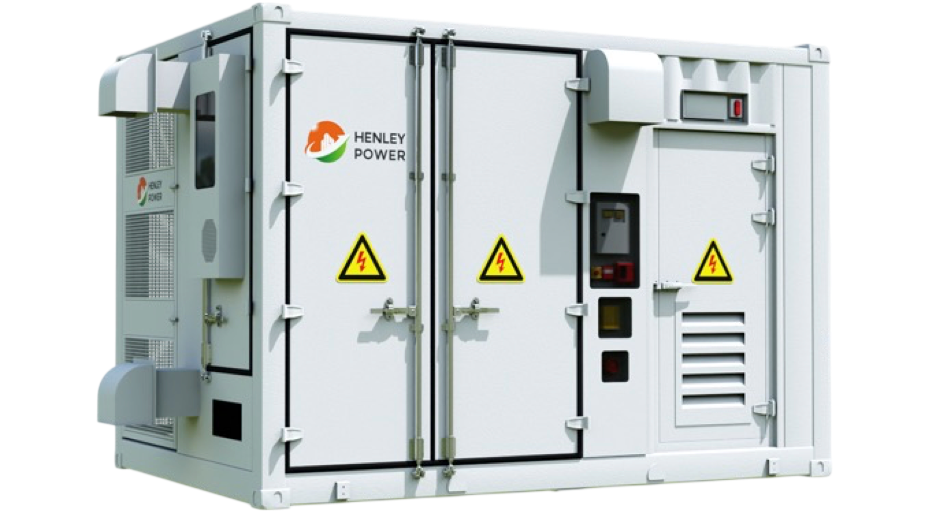
Grid-forming BESS sets voltage and frequency reference autonomously rather than tracking an external grid signal. ENTSO-E network code revisions are progressively moving grid-forming capability from optional to required for new utility-scale storage interconnections. Revenue stacking is FCR-D plus FFR plus aFRR plus system strength and black-start service contracts, layered on top of energy arbitrage. Henley Power supplies the utility BESS platform in 3 MWh, 4 MWh, and 5 MWh containerized blocks, with grid-forming PCS as standard and IEC 61850-7-420 DER profile support. Manufactured in Shandong, China.

01 — THE GRID-FORMING CASE

Why ancillary services need grid-forming

European grids are running with progressively less synchronous generation and more inverter-coupled renewable capacity. The system services synchronous machines provided automatically — voltage support, inertia, fault-current contribution — now have to be procured from inverters. The inverters that can do it are grid-forming, not grid-following.

Grid-forming and grid-following are not the same hardware. A grid-following inverter measures an existing voltage and frequency reference and feeds current into it. Without that external reference, it can’t operate. A grid-forming inverter generates the voltage and frequency reference itself, behaves like a synchronous machine on the bus, and remains stable at high inverter penetration. During high-renewable periods in ENTSO-E zones, the grid-following population needs grid-forming assets nearby to remain stable — and those periods are lengthening every year.

ENTSO-E is moving grid-forming from optional to required. In November 2025 ENTSO-E published its Phase II technical report on grid-forming requirements, drafted into the upcoming NC RfG 2.0 amendment — once adopted by the European Commission, grid-forming capability becomes binding for new storage and renewable plants above 1 MW. National frameworks are running ahead: GB Grid Code GC0137, German VDE-AR-N 4120 and 4130, Nordic FCR-D specifications. New utility-scale BESS interconnection requests in 2026 are increasingly priced against grid-forming-capable assets as the baseline, not the upgrade.

Revenue stacking is what justifies the capex. No single ancillary product alone justifies a utility BESS at current price levels. Stacking does. FCR-D for primary frequency response, FFR for sub-second injection, aFRR for secondary balancing, plus system-strength service contracts (in markets that have them) and black-start tendering, layered on top of energy arbitrage. Grid-forming capability is what unlocks all of these simultaneously rather than a subset.

02 — WHAT THE BATTERY DOES

Four services, one platform

System strength & SCR

Grid-forming PCS contributes short-circuit ratio at the connection point. As inverter share grows, SCR is the metric TSOs use to qualify weak-grid connections — and in several European markets, system-strength service contracts are now a separately procured ancillary product.

Black-start capability

Re-energise a dead bus without an external reference. Black-start tendering is becoming a contracted ancillary product across European TSOs as the synchronous fleet retires. Grid-forming PCS is the technical pre-condition for the bid.

Sub-second FFR

Fast Frequency Response within 1 second of frequency deviation, sustained for the contracted window. The technical envelope grid-following inverters cannot guarantee.

Synthetic inertia

Emulates the rotational inertia synchronous machines provided automatically. Slows the rate-of-change-of-frequency during contingencies, buying the rest of the response stack time to act.

03 — INTEGRATION ARCHITECTURE

Three ways to wire it

Grid-forming BESS connects in three patterns, driven by whether the asset is contracted as a standalone ancillary-services provider, co-located with renewable generation, or aggregated across distributed sites under a virtual power plant. Tier-1 LFP cells from publicly listed manufacturers, multi-supplier homologated.

Mode A

Standalone TSO-connected

Direct interconnection at HV or upper-MV substation, dedicated metering, single-asset bidder into FCR-D, FFR, aFRR, and system-strength markets. The default configuration for merchant ancillary-services projects in Northern and Central Europe.

Default

Mode B

Co-located behind shared PCC

BESS at the same point of common coupling as a wind or solar plant, but contractually independent for ancillary-services revenue. Single interconnection, separate metering, separate market participation. Used when the renewable PPA and ancillary stack are in different ownership vehicles.

Mode C

Aggregated VPP

Multiple distributed BESS sites aggregated under a TSO-approved aggregator into a single dispatchable response. Each site retains its own grid-forming PCS and local control loop; the aggregator handles bidding and TSO-facing settlement.

04 — SIZING LOGIC

Sizing a grid-forming BESS

Sizing comes from three levers in this order: contracted MW commitment first, response duration second, energy reserve third. Get the contract MW wrong and the asset under-bids the auction; get the duration wrong and the asset is disqualified mid-event.

Lever 01 — Power

Contracted MW commitment

Drives PCS power rating. Frame against the largest single ancillary-services bid the project intends to submit — typically aFRR or FCR-D contracted MW. Round up for stacked simultaneous response.

Lever 02 — Duration

Response sustain window

Drives MWh-to-MW ratio. Continental FCR sustains 15 minutes; aFRR and mFRR cover longer windows; Nordic FCR-D and FFR run shorter sustain envelopes. The longest contracted product sets the floor on the energy nameplate.

Lever 03 — Energy

Stacked-product MWh exposure

Drives total MWh nameplate. The energy reserve has to cover the worst-case stacked dispatch event, plus headroom for SoC management between events.

Rule of thumb

FCR-D bid 5–20 MW: typically 3–10 MWh, single or paired containerized blocks. Stacked FCR-D + FFR + aFRR 20–50 MW: 15–40 MWh, multi-container at HV interconnection. System-strength 50 MW+: 40–150 MWh, multi-substation distributed architecture. Detailed sizing confirms against TSO bidding rules and the project’s stacked-product strategy.

Bidding into FCR-D, FFR, or aFRR? We'll run the sizing with you.

05 — RECOMMENDED HENLEY PLATFORM

Three containerized blocks

The utility BESS platform ships to grid-forming ancillary-services projects, renewable-coupled storage, and standalone grid-scale arbitrage. Selection between 3 MWh, 4 MWh, and 5 MWh comes down to the contracted MW commitment, the response sustain window, and the interconnection footprint.

T&D PORTFOLIO

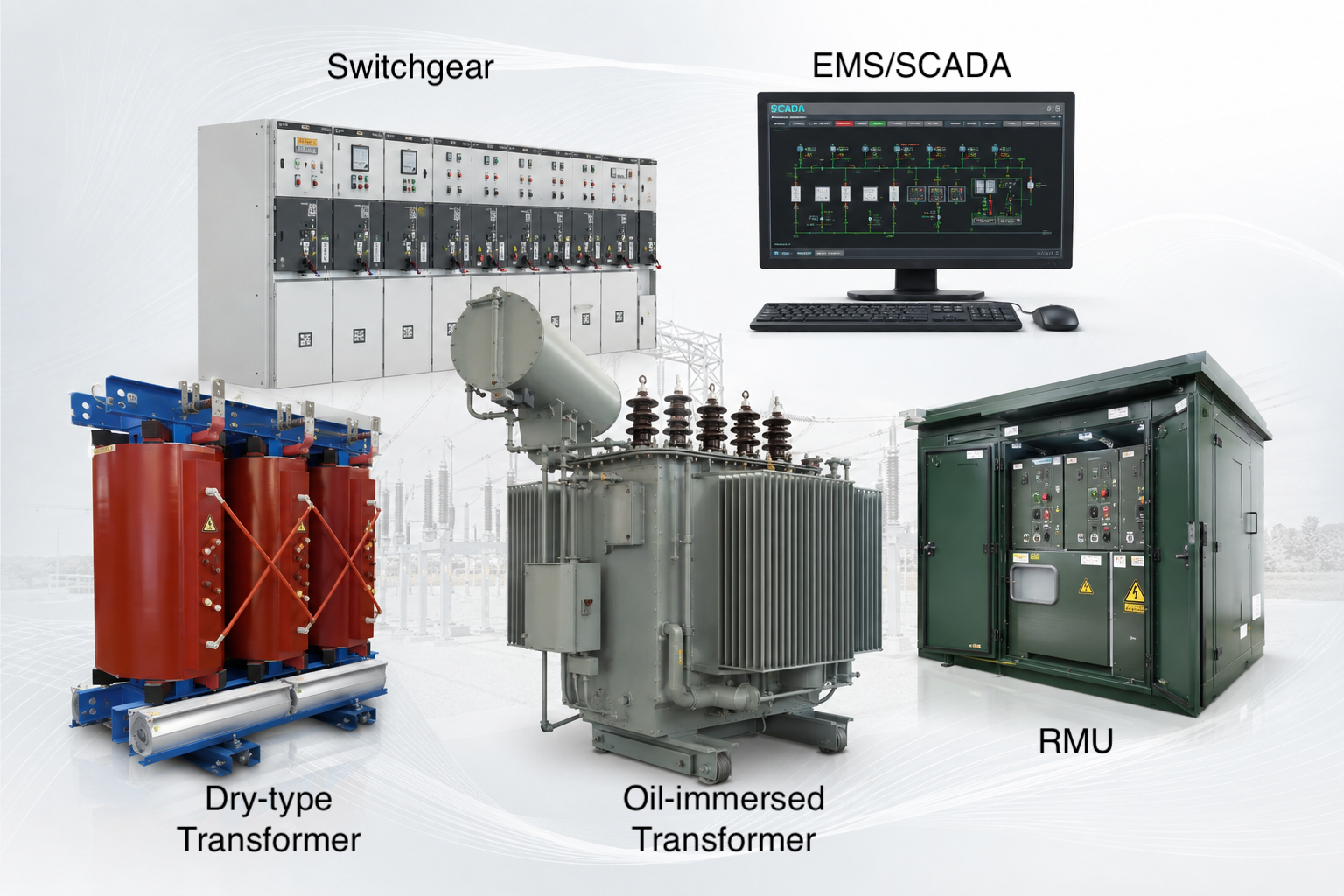
Power Transformers · Substations · RMU · Switchgear

Power infrastructure for energy projects across Europe and Africa.

50 kVA – 180 MVA

Power transformers 10–220 kV, box-type substations, ring main units to 40.5 kV, MV/LV switchgear. Pre-paired to Henley Power BESS at spec stage.

View product

UTILITY

HLY-BESS-Utility-2MWh

Utility-Scale BESS — 2 MWh Containerised.

2 MWh

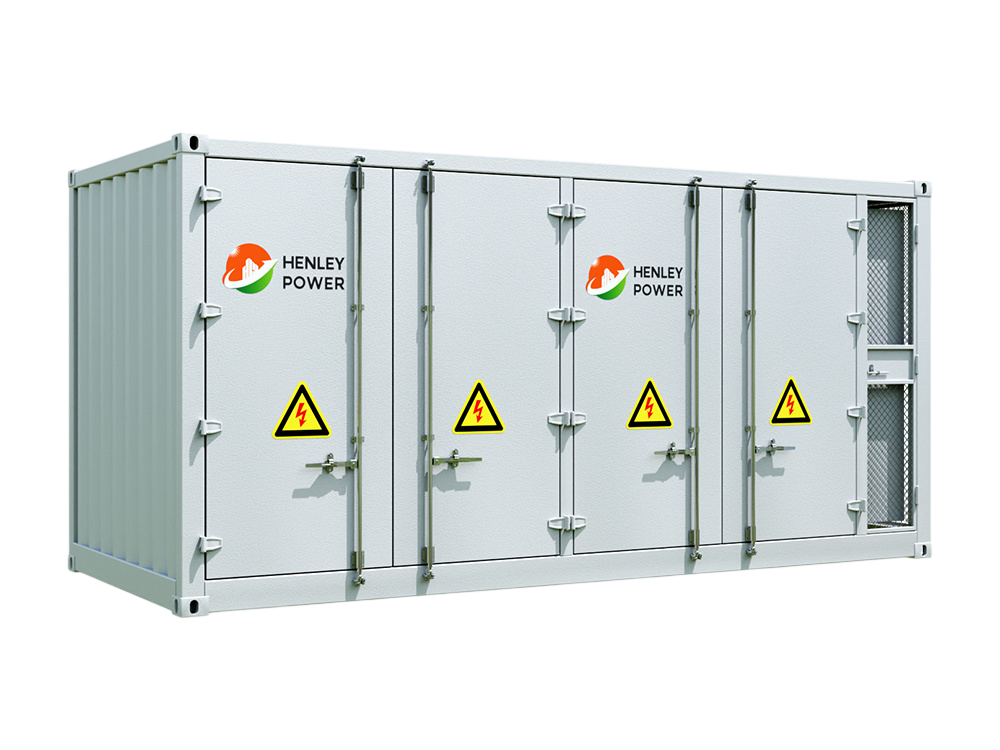
2,232 kWh liquid-cooled LFP in a 20-ft ISO container — IPP solar farms, wind balancing, utility substations.

View product

UTILITY

HLY-BESS-Utility-3MWh · 4MWh · 5MWh

Utility-Scale BESS — 3 to 5 MWh Liquid-Cooled Container.

3–5 MWh

3,344 / 4,180 / 5,015 kWh liquid-cooled LFP in 20-ft ISO containers — grid-scale storage, frequency response, BESS-as-a-service.

View product

06 — REFERENCE PROJECTS

Honest about where we are

Note from engineering

Henley Power supplies grid-forming PCS as standard across the utility BESS platform. Deployed grid-forming references in commissioned operation are mostly Chinese provincial — Inner Mongolia, Ningxia, Hebei, Shandong — under State Grid and Southern Grid interconnection rules. European TSO-qualified projects under ENTSO-E network code are in active development with our European partners.

TSO qualification — the formal sign-off that the asset meets a specific operator’s interconnection requirements (50Hertz, TenneT, Energinet, RTE, National Grid ESO, EirGrid) — is per-project at commissioning, run against that operator’s current grid code revision and witnessed test schedule. Pre-commissioning compliance documentation, type-test reports, and the technical pack from Chinese provincial deployments are shared after NDA on request.

If your project needs a fully ENTSO-E-qualified deployed reference as a pre-condition to specification, we’ll say so openly rather than over-promise. Browse current project portfolio →

07 — FAQ

Common questions

What's the difference between grid-forming and grid-following inverters?
A grid-following inverter measures an existing voltage and frequency reference and feeds current into it — without that reference, it can’t operate. A grid-forming inverter generates the reference itself, behaves like a synchronous machine on the bus, and stays stable at high inverter penetration. Practical difference: grid-forming assets can black-start, contribute system strength, and deliver synthetic inertia. Grid-following assets cannot.
The picture is moving quickly. ENTSO-E published its Phase II technical report on grid-forming requirements in November 2025, drafted into the upcoming NC RfG 2.0 amendment — once adopted by the European Commission, grid-forming becomes binding for new storage and renewable plants above 1 MW. National frameworks are running ahead: GB Grid Code GC0137, German VDE-AR-N 4120 and 4130, Nordic FCR-D specifications. Project-specific applicability is confirmed against the connection request and the operator’s current grid code revision.
Warranty insurance via licensed European insurer is available as a project option for DFI-financed and institutionally-backed tenders. Parent guarantee or escrow alternative on request.
Stacked simultaneous participation is supported under most ENTSO-E member-state frameworks, subject to the TSO’s specific stacking rules. The grid-forming PCS dispatches response on a priority basis: FFR sub-second, FCR-D primary frequency, aFRR secondary balancing, with state-of-charge management coordinating the energy reserve across products. Settlement is per-product, per-bid, against the TSO’s metering.
Sub-second injection for FFR (full contracted MW within 1 second of frequency event), primary FCR-D response within 30 seconds, sustained to the contracted window. Synthetic inertia is continuous during operation. Type-test reports and witness-test protocols are issued at commissioning against the operator’s specific test procedure.

08 — RELATED SOLUTIONS

Adjacent applications

Grid-forming and frequency regulation overlap with renewable-coupled storage and standalone grid-scale projects.

MINING

MINING · DIESEL OFFSET

Mining & Remote Industrial Storage

Battery storage for off-grid mines, oil and gas, construction camps, and remote industrial operations — diesel offset, spinning reserve, energy autonomy.

View solution

GRID-SCALE

FTM · GRID SERVICES

Grid-Scale Battery Storage

Standalone front-of-meter battery storage for transmission and distribution operators, IPPs, and grid-scale BESS-as-a-service tenders.

View solution

PEAK SHAVING

C&I · DEMAND CHARGE

Peak Shaving & Demand Charge Reduction

Cut commercial and industrial demand charges 20–40% by discharging stored energy during 15-minute peak intervals. Stackable with time-of-use arbitrage.

View solution