Solutions · Renewable Generation · Solar

Battery Storage for Solar Farms

Co-located battery storage for utility-scale solar PV. Capacity firming, time-shift arbitrage, curtailment recovery, ancillary services. Utility BESS for European and emerging-market solar integration.
What is solar farm storage
A solar farm BESS pairs lithium-iron-phosphate batteries with utility-scale PV plants. It shifts daytime generation into the evening peak-price window, recovers inverter-clipping losses (typically 3–8% of theoretical generation at high DC/AC ratios, documented in PV performance-modeling literature), and adds ancillary-services revenue PV alone can’t capture. Henley Power supplies the utility platform in 3, 4, and 5 MWh containerized blocks (AC- or DC-coupled) with grid-forming PCS as standard and IEC 61850-7-420 DER profile support. Chinese scale. Global service. Manufactured in Shandong, China. European projects serviced from Romania.

01 — THE SOLAR-PLUS-STORAGE CASE

Why solar developers add batteries

Utility-scale solar economics have shifted twice in the last decade. First merchant LCOE undercut conventional generation; then capture-price collapse and inverter clipping took back a chunk of the operating margin. Storage converts the duck curve from a problem into a revenue stream.

Capture-price collapse is the dominant economic loss. Across Spain, Italy, Greece, and Germany during 2024–2025, midday solar capture prices repeatedly hit zero or went negative on high-irradiance days (SolarPower Europe EU Market Outlook 2025–2030; ENTSO-E Transparency Platform spot-price data, 2024–2025). Storage shifts the energy out of the noon collapse window into the evening peak hours, where the capture price holds.

Inverter clipping eats nameplate generation. Modern utility PV plants are built with DC/AC ratios of 1.3–1.5 to harvest more morning and afternoon energy. The trade-off is hard-clipping at midday when DC output exceeds inverter AC nameplate. Co-located storage on the DC side captures the clipped energy directly.

Capacity firming and ancillary services close the third loop. ENTSO-E network code requirements increasingly push variable-renewable plants toward dispatchable delivery profiles. PPA buyers pay premiums for shaped delivery. A BESS sized at 2–4 hour duration converts stochastic PV output into a profile the offtaker can model and bid forward, while the PCS qualifies the plant for FCR-D, FFR, and aFRR participation on the same interconnection envelope.

02 — WHAT THE BATTERY DOES

Four revenue paths, one platform

Time-shift arbitrage

Charge during midday capture-price collapse, discharge during evening peak. Direct revenue uplift on every cycle. The dominant value lever in DE / IT / ES / GR markets where solar capture prices have decoupled from spot averages.

Clipping recovery

DC-coupled storage captures inverter-clipped energy the AC interconnection never sees. At DC/AC ratios of 1.3–1.5, recovers 3–8% of theoretical generation depending on irradiance and design margin.

Capacity firming

Convert stochastic PV output into PPA-deliverable shaped output for utility offtakers. Sized for 2–4 hour discharge windows aligned to the contracted dispatch profile, not to nameplate availability.

Ancillary services

FCR-D, FFR, aFRR, and mFRR participation through grid-forming PCS, stacked on top of the PV PPA. ENTSO-E network code compatible, TSO-specific qualification at commissioning.

03 — INTEGRATION ARCHITECTURE

Three ways to wire it

Solar farm storage doesn’t fit a single architecture. The right configuration depends on whether the project is greenfield or retrofit, the inverter vendor’s DC-side openness, and how the revenue stack is structured. The platform constants don’t change between modes: Tier-1 LFP cells from publicly listed manufacturers, multi-supplier homologated, and grid-forming PCS as standard across all utility BESS containers, with IEC 61850-7-420 DER profile support — project-specific edition confirmed at commissioning.

Mode A

AC-coupled co-located

Standalone BESS containers wired to the same MV substation as the PV plant. Independent inverters, independent control. Easiest to retrofit, easiest to procure separately, easiest to expand. The default for European utility-scale solar deployments and the retrofit pathway for existing plants.

Default

Mode B

DC-coupled hybrid

Battery DC bus tied directly to the PV array’s DC link, sharing the inverter with the PV string. Captures clipping losses the AC side can’t recover. Higher round-trip efficiency on PV-to-storage paths. Used in greenfield projects where the inverter vendor supports it and DC/AC ratios exceed 1.3.

Mode C

Standalone behind-PCC

BESS at the same point of common coupling as the PV plant but contractually independent — separate metering, separate revenue stack. Used when the PV PPA and BESS arbitrage strategy are owned by different parties or financed through different vehicles.

04 — SIZING LOGIC

How to size a PV-coupled BESS

Three levers drive the sizing study.

Lever 01

PV nameplate & DC/AC ratio

Sets the baseline energy throughput and the clipping-recovery opportunity. DC/AC ratios above 1.3 yield more clipping recovery; ratios at 1.1 push the case toward AC-coupling and time-shift only.

Lever 02

Evening tariff window (hours)

Length of the high-priced evening discharge window. Sets the energy stack relative to PCS power. 2-hour markets produce different sizing than 4-hour markets — same PV plant, different optimal BESS.

Lever 03

Ancillary contract size (MW)

PCS power rating dimension. Frame against the FCR-D, FFR, or aFRR contract MW commitment the project intends to bid into. Stacks on top of the time-shift duty cycle.

Rule of thumb

50–100 MW utility solar plant: typically a 25–50 MWh BESS with PCS sized to 25–40% of PV nameplate. 200–500 MW solar park: typically 100–250 MWh distributed across multiple substations, with AC vs DC coupling driven by the inverter vendor’s DC-side capability and the clipping profile. Starting points for feasibility — detailed sizing studies use irradiance back-tests, capture-price curves, and PPA shaping clauses.

Got a solar project facing capture-price collapse? We'll run the time-shift numbers with you.

05 — RECOMMENDED HENLEY PLATFORM

Three containerized blocks

The utility BESS platform is generation-agnostic at the container and PCS level. The same containerized blocks ship to solar-plus-storage, wind-plus-storage, and standalone grid-scale projects. Selection between 1 MWh, 2 MWh, and the 3–5 MWh SKU family comes down to PV nameplate, evening discharge duration, and substation footprint.

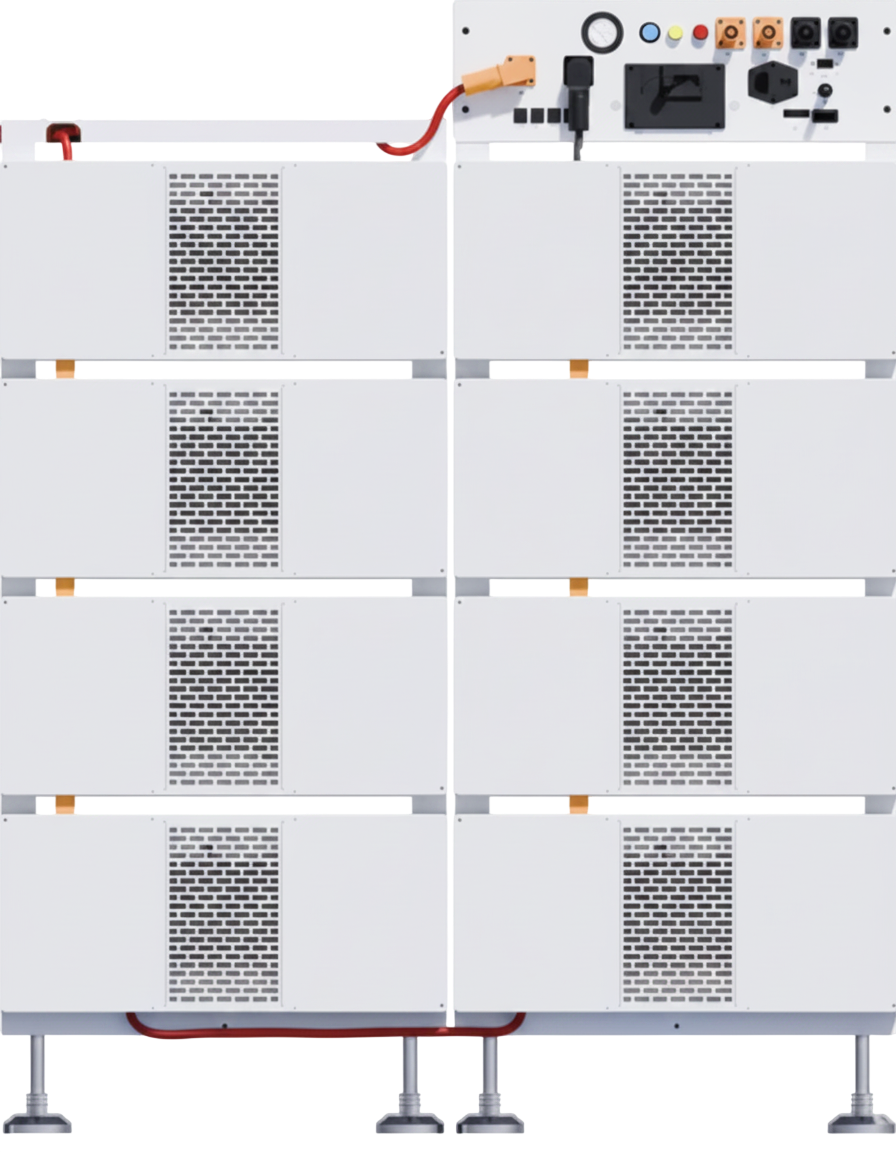
C&I · MODULAR · AIR-COOLED

HLY-BESS-Commercial-Industrial-Modular-32kWh

The most economical path from 96 kWh to 2.5 MWh.

96 kWh – 2.5 MWh

Air-cooled modular rack. 32.2 kWh per module, 768 V or 819 V cluster. DC-only with string, hybrid, or central PCS.

View product

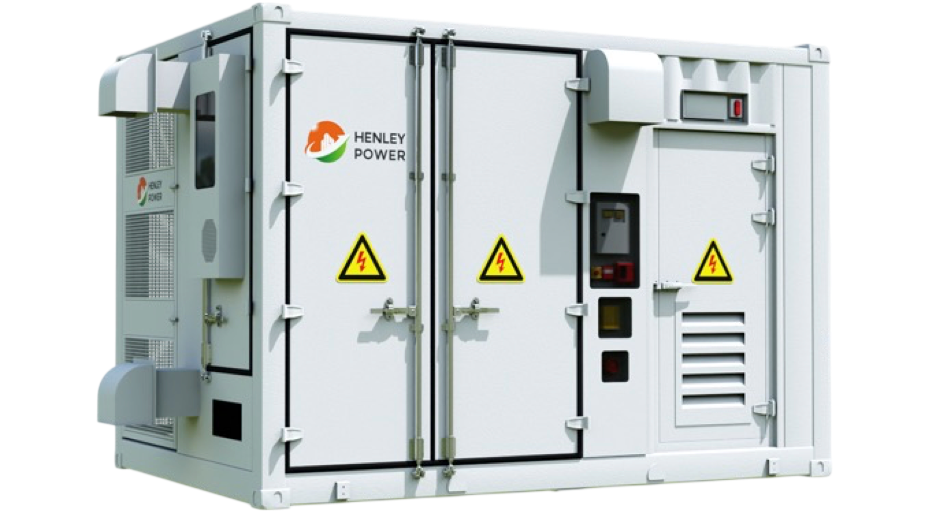
UTILITY

HLY-BESS-Utility-2MWh

Utility-Scale BESS — 2 MWh Containerised.

2 MWh

2,232 kWh liquid-cooled LFP in a 20-ft ISO container — IPP solar farms, wind balancing, utility substations.

View product

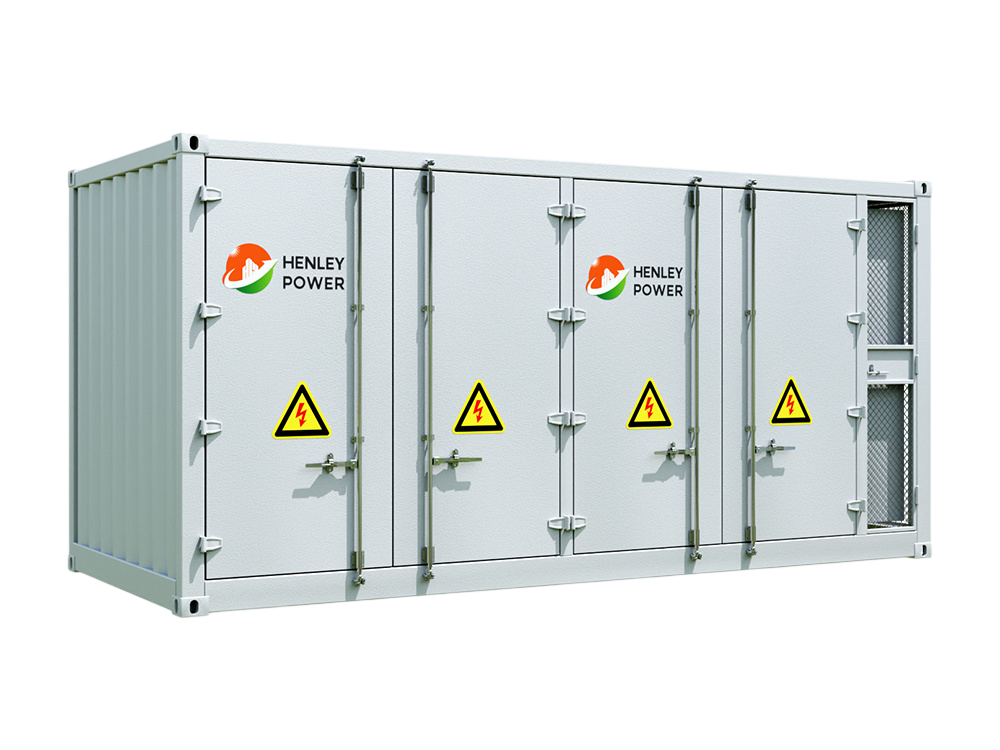
UTILITY

HLY-BESS-Utility-3MWh · 4MWh · 5MWh

Utility-Scale BESS — 3 to 5 MWh Liquid-Cooled Container.

3–5 MWh

3,344 / 4,180 / 5,015 kWh liquid-cooled LFP in 20-ft ISO containers — grid-scale storage, frequency response, BESS-as-a-service.

View product

06 — REFERENCE PROJECTS

Where the platform is already running

Note from engineering

Solar-plus-storage is the configuration Henley Power has deployed most. The current portfolio includes utility solar+storage and PV-storage-diesel hybrid plants commissioned across Inner Mongolia, Ningxia, Hebei, Henan, and Shandong provinces in China, plus a Sahel-region microgrid in Chad with PV+diesel+BESS. The 3 MWh, 4 MWh, and 5 MWh containerized blocks proposed for European projects are the same blocks running in those plants today.

European utility solar+BESS reference projects are in commissioning across multiple ENTSO-E bidding zones — the engineering differences live in ENTSO-E interconnection paperwork and TSO-specific qualification, not in the platform itself. Pre-commissioning European references and project case studies are shared after NDA on request.

If a project pre-condition requires an EU-deployed reference plant rather than a deployed-in-China analogue, we’ll say so rather than over-promise. Browse current project portfolio →

07 — FAQ

Common questions

Why pair a solar farm with battery storage when solar LCOE is already low?
Cheap LCOE doesn’t translate to cheap revenue when midday capture prices collapse to zero or go negative on high-irradiance days. Storage converts the noon-priced kWh into evening-priced kWh and adds an ancillary-services revenue stream solar alone can’t capture. The economics work hardest in DE / IT / ES / GR bidding zones where solar penetration has driven structural midday price collapse during 2024–2025.
AC-coupled is the default when DC/AC ratio is below 1.3 and the project is a retrofit. It’s vendor-agnostic and easiest to procure. DC-coupled becomes the better economic choice when DC/AC ratio is 1.3 or higher, the inverter vendor supports shared DC bus topology, and the project is greenfield — clipping recovery is only available on the DC side, and at 1.5 ratio it adds 5–8 percentage points of generation back to the plant.
Warranty insurance via licensed European insurer is available as a project option for DFI-financed and institutionally-backed tenders. Parent guarantee or escrow alternative on request.
Yes. When wired as a separate metering point or separately revenue-stacked behind the same point of common coupling, the BESS qualifies for FCR-D, FFR, aFRR, and mFRR under ENTSO-E network code requirements. Grid-forming PCS supports the response times those markets require. Specific TSO qualification confirmed per project at commissioning.
Start with PCS at 25–40% of PV nameplate and energy stack at 2–4 hour discharge duration. For high-clipping projects (DC/AC at or above 1.4), shift toward DC-coupled architecture and add 5–10% extra energy nameplate to capture recoverable losses. Refine against irradiance back-tests and capture-price curves in your TSO area. Detailed sizing studies released after NDA.

08 — RELATED SOLUTIONS

Adjacent applications

The same BESS platform deploys across renewable generation and grid-services use cases. Three closest siblings to solar+storage.

WIND FARMS

WIND · OUTPUT SMOOTHING

Battery Storage for Wind Farms

Battery storage paired with onshore and offshore wind farms — output smoothing, curtailment recovery, ancillary services revenue.

View solution

DATA CENTRES

DATA CENTRE · BRIDGE POWER

Data Centres & AI Infrastructure

Battery storage for hyperscale and colocation data centres — bridge interconnection delays, replace diesel UPS, manage AI compute load volatility.

View solution

GRID-SCALE

FTM · GRID SERVICES

Grid-Scale Battery Storage

Standalone front-of-meter battery storage for transmission and distribution operators, IPPs, and grid-scale BESS-as-a-service tenders.

View solution