Commercial & Industrial BESS · Liquid-Cooled · Three Deployment Modes

261 kWh in a single liquid-cooled cabinet.

Chinese scale. Global service.
HLY-BESS-Commercial-Industrial-261kWh-100kW · -110kW · -125kW · -DC
One battery cabinet. Three ways to deploy it — integrated PCS (100/110/125 kW), DC battery-only for central PCS arrays up to 2,500 kW, or hybrid-inverter compatible (30–125 kW) for solar+storage. LFP, R513A cooling, grid-forming. Built in Dezhou, Shandong; serviced from Romania.

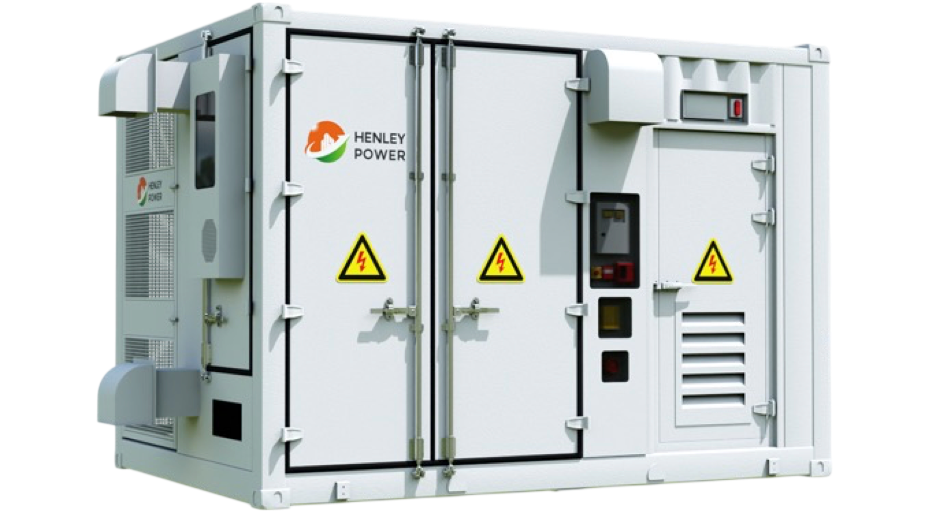
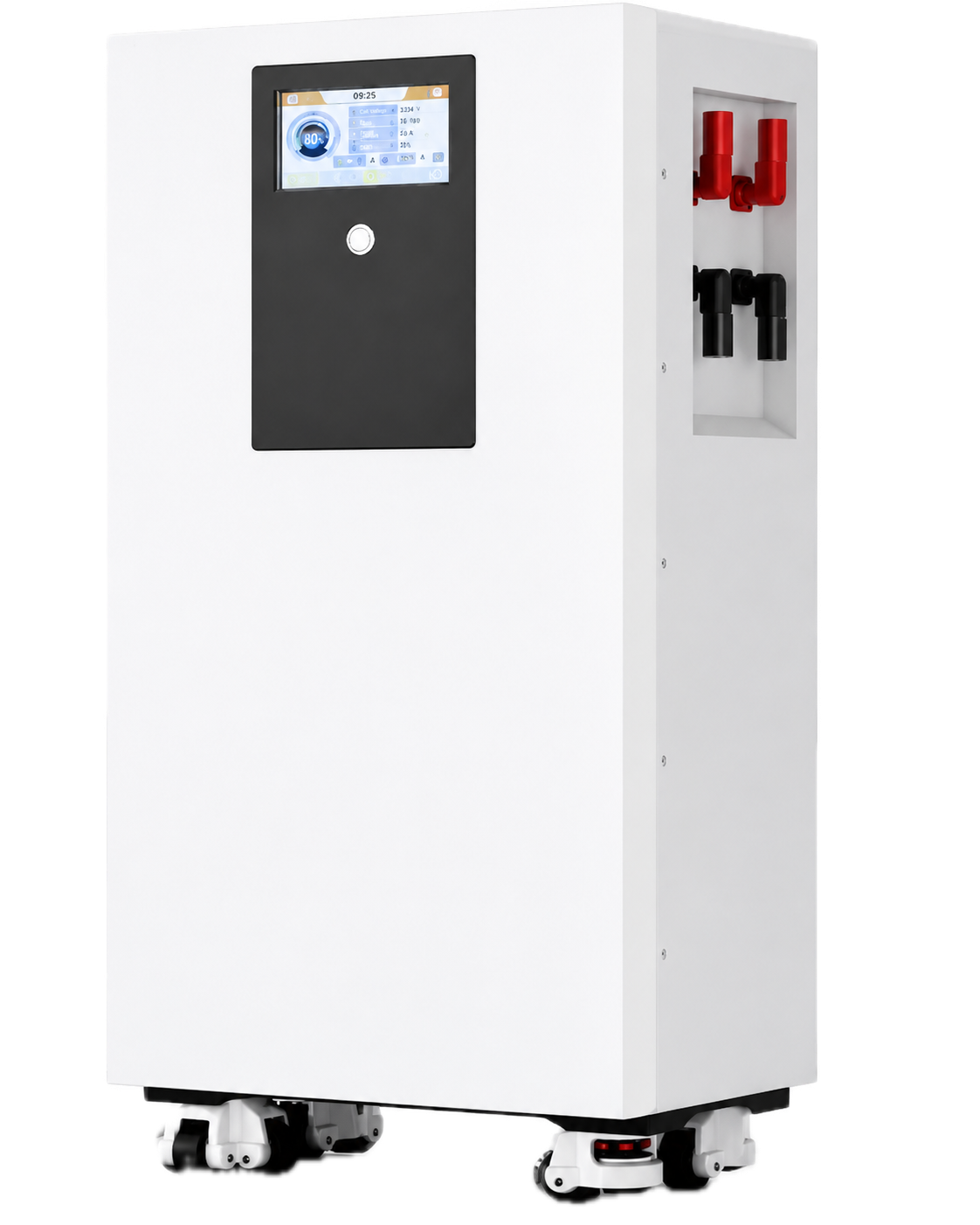
HLY-BESS-Commercial-Industrial-261kWh is a 261 kWh liquid-cooled outdoor C&I battery cabinet from Henley Power, available in three deployment modes: all-in-one with integrated PCS (100, 110, or 125 kW); DC battery-only paired with a central PCS (630–2,500 kW) for multi-cabinet arrays; and hybrid-inverter compatible (30–125 kW) for AC- or DC-coupled solar+storage. LFP cells, 10,000 cycles at 80% DoD to 70% SOH. Grid-forming standard. Manufactured in Dezhou, Shandong, China; European projects serviced from Romania.

261 kWh

100–125

kW PCS
three configurations

10,000

80% DoD · 70% SOH · 0.5C · 25°C

5+5yr

grid-forming standard
PRODUCT FEATURES

Why engineers reach for the 261.

R513A refrigerant · Cell ΔT ≤ 2.5°C · GWP 631

Eco-Refrigerant Liquid Cooling

R513A holds cell-to-cell temperature spread under 2.5°C without the high-GWP penalty of older refrigerants. Most cabinets in this class use R134a (GWP 1,430) or run pure air-cooling at 5–8°C spread. Tighter thermals are the largest single lever on real-world cycle life — and R513A keeps the EU F-gas paperwork shorter.
100 / 110 / 125 kW · same cabinet · swap PCS

Three PCS Configurations, One Battery

Solar self-consumption at 100 kW gives a clean 2.5-hour discharge from a full charge. EV-buffer sites pick 125 kW to absorb simultaneous fast-charge events. The battery, BMS, cooling loop, and warranty don’t change. Only the inverter does. That’s unusual — most C&I cabinets ship one fixed C-rate and force you to oversize.
Grid-forming standard · LVRT/HVRT · TN/TT/IT

Grid-Forming as Standard, Not Option

Grid-forming control is shipped on every 261, not priced as an upcharge. The unit can anchor a microgrid black-start, bridge an islanding event, and hold synchronisation when the grid gets wobbly. Compatible with TN-S, TN-C, TN-C-S, TT, and IT network configurations — country-specific compliance handled at commissioning.
8,000 @ 95% DoD · 10,000 @ 80% DoD · 70% SOH

Cycle Life with Two Useful Numbers

Two cycle-life ratings, both real. 10,000 at 80% DoD is the conservative number to size a 25-year project around. 8,000 at 95% DoD is for sites that need every kWh per cycle — multi-charge EV hubs, demand-response platforms. Most product pages publish only the optimistic number. We publish both because the projects are different.
TECHNICAL SPECIFICATIONS

Three configurations. One platform.

The HLY-BESS-Commercial-Industrial-261kWh ships as one battery cabinet with a choice of three PCS sizes. The battery, BMS, EMS, cooling loop, fire suppression, and warranty are identical across the three. The PCS sizing changes the C-rate and the cost. All values per IEC 62933-2-1.
HLY-BESS-Commercial-Industrial-261kWh-datasheet-v5 · May 2026

Parameter

Configuration A

100 kW PCS

Configuration B

110 kW PCS

Configuration C

125 kW PCS

Battery System
Cell chemistryLiFePO₄ (LFP) — Cobalt-Free · EU Reg 2023/1542LiFePO₄ (LFP) — Cobalt-Free · EU Reg 2023/1542
Cell specification3.2 V / 314 Ah prismatic · A-grade · full traceability3.2 V / 314 Ah prismatic · A-grade · full traceability
Nominal capacity261 kWh261 kWh
Max. depth of discharge100% (95% recommended for cycle longevity)100% (95% recommended for cycle longevity)
Cycle life10,000 @ 80% DoD · 8,000 @ 95% DoD · 0.5C charge / 0.5C discharge · 25 °C ambient · EOL 70% SOH Test method per IEC 62620 cycle-life methodology, Henley homologation protocol. Independent third-party reports available under NDA.10,000 @ 80% DoD · 8,000 @ 95% DoD · 0.5C charge / 0.5C discharge · 25 °C ambient · EOL 70% SOH Test method per IEC 62620 cycle-life methodology, Henley homologation protocol. Independent third-party reports available under NDA.
Round-trip efficiency (RTE)92% AC-AC at system level (0.5C, 25 °C, 80% DoD window, BoL)92% AC-AC at system level (0.5C, 25 °C, 80% DoD window, BoL)
Design life25 years25 years
Warranty5 years system · 5 years optional extension (battery)5 years system · 5 years optional extension (battery)
Power Conversion System (PCS)
Rated AC power100 kW100 kW
Max AC power (1 min)120 kW120 kW
PCS topologyThree-level transformerless · liquid-cooled · IP65Three-level transformerless · liquid-cooled · IP65
AC output voltage400 V (±10%) · 3-phase + N + PE400 V (±10%) · 3-phase + N + PE
Frequency50 / 60 Hz50 / 60 Hz
Max PCS efficiency98.5% peak (European-weighted η ≥ 97.5%)98.5% peak (European-weighted η ≥ 97.5%)
Power factor / THDi−1 to +1 adjustable · 0.99 at rated load · THDi < 3% at rated−1 to +1 adjustable · 0.99 at rated load · THDi < 3% at rated
Response timePCS capability ≤ 20 ms · Full system activation < 500 msPCS capability ≤ 20 ms · Full system activation < 500 ms
Grid supportGrid-forming standard · LVRT / HVRT · 4-quadrant Q controlGrid-forming standard · LVRT / HVRT · 4-quadrant Q control
Grid networksTN-S · TN-C · TN-C-S · TT · ITTN-S · TN-C · TN-C-S · TT · IT
Thermal Management & Environment
Cooling methodIntelligent Liquid Cooling · R513A eco-refrigerant (GWP 631)Intelligent Liquid Cooling · R513A eco-refrigerant (GWP 631)
Cell temperature spreadΔT ≤ 2.5°C across cabinetΔT ≤ 2.5°C across cabinet
Operating temperature−30°C to +55°C (no derating to +35°C)−30°C to +55°C (no derating to +35°C)
Storage temperature−30°C to +60°C−30°C to +60°C
Max. operating altitude4,000 m (derated above 2,000 m)4,000 m (derated above 2,000 m)
Noise level≤ 75 dB(A) at 1 m≤ 75 dB(A) at 1 m
Enclosure & Protection
Cabinet typeOutdoor cabinet · plug-and-play · forklift baseOutdoor cabinet · plug-and-play · forklift base
IP ratingIP54 cabinet (IP55 optional) · IP65 battery module · IP65 PCSIP54 cabinet (IP55 optional) · IP65 battery module · IP65 PCS
Anticorrosion gradeC4 standard · C5 optional (coastal & marine sites)C4 standard · C5 optional (coastal & marine sites)
Cabinet colourRAL 7035 standard · custom RAL on requestRAL 7035 standard · custom RAL on request
Safety & Fire Protection
Fire detectionPack-level thermal runaway · CO + temperature per module · smoke detection cabinet-levelPack-level thermal runaway · CO + temperature per module · smoke detection cabinet-level
Fire suppressionPack-level Novec · cabinet-level aerosolPack-level Novec · cabinet-level aerosol
Explosion protection3-level design · pressure relief vents · UL 9540A propagation tested3-level design · pressure relief vents · UL 9540A propagation tested
StandardsUL 9540A · UL 1973 · IEC 62619 · UN 38.3UL 9540A · UL 1973 · IEC 62619 · UN 38.3
Communication & Control
Communication protocolModbus TCP · Modbus RTU · CAN · IEC 60870-5-104 · IEC 61850-7-420 (DER profile, optional) · DNP3Modbus TCP · Modbus RTU · CAN · IEC 60870-5-104 · IEC 61850-7-420 (DER profile, optional) · DNP3
Communication interfaceCAN / RJ45 / RS485 / Ethernet / 4G optionalCAN / RJ45 / RS485 / Ethernet / 4G optional
EMS platformEU cloud EMS — energy trading ready · AI dispatch · OTA · remote O&M 24/7EU cloud EMS — energy trading ready · AI dispatch · OTA · remote O&M 24/7
Integration & Deployment
Deployment mode A — All-in-oneIntegrated PCS (100 / 110 / 125 kW) · stand-alone cabinet, no external inverter · models HLY-BESS-Commercial-Industrial-261kWh-100kW / -110kW / -125kWIntegrated PCS (100 / 110 / 125 kW) · stand-alone cabinet, no external inverter · models HLY-BESS-Commercial-Industrial-261kWh-100kW / -110kW / -125kW
Deployment mode B — DC battery-onlyPure battery cabinet, no internal PCS · pairs with central or string PCS 630–2,500 kW · DC bus connection · model HLY-BESS-Commercial-Industrial-261kWh-DC · for multi-cabinet MWh arraysPure battery cabinet, no internal PCS · pairs with central or string PCS 630–2,500 kW · DC bus connection · model HLY-BESS-Commercial-Industrial-261kWh-DC · for multi-cabinet MWh arrays
Deployment mode C — Hybrid inverterAC- or DC-coupled with compatible hybrid inverters 30 / 50 / 60 / 100 / 125 kW · solar+storage, off-grid, microgrid retrofit · model HLY-BESS-Commercial-Industrial-261kWh-DC (same cabinet)AC- or DC-coupled with compatible hybrid inverters 30 / 50 / 60 / 100 / 125 kW · solar+storage, off-grid, microgrid retrofit · model HLY-BESS-Commercial-Industrial-261kWh-DC (same cabinet)
DC connection (modes B & C)Nominal 1,331 V · range 1,040–1,498 V · via project DC busbar or inverter BESS portNominal 1,331 V · range 1,040–1,498 V · via project DC busbar or inverter BESS port
Service
Service regionsEU · Eastern Europe · Central Asia · Southeast Asia · West Africa · North Africa — spare parts in-regionEU · Eastern Europe · Central Asia · Southeast Asia · West Africa · North Africa — spare parts in-region
Lead time35 days ex-works from contract signature and deposit receipt35 days ex-works from contract signature and deposit receipt
All values measured per IEC 62933-2-1 at 25°C unless otherwise stated. Specifications subject to change without prior notice.
DEPLOYMENT TOPOLOGIES

One cabinet. Three ways to integrate it.

The HLY-BESS-Commercial-Industrial-261kWh ships as the same physical cabinet regardless of topology. What changes is the PCS — integrated at the factory, supplied separately as a central unit, or handled by the site’s hybrid inverter. Battery, BMS, cooling, and warranty don’t change.
Mode A

All-in-One with Integrated PCS

PCS is built into the cabinet at the factory. The unit ships AC-ready: connect to grid, wire communications, commission. No external inverter procurement, no separate PCS integration scope. The simplest path from purchase order to first discharge.
Mode B

DC Battery-Only + Central PCS

Cabinet ships without integrated PCS. The DC bus connects to a central or string PCS in the range 630–2,500 kW. One PCS handles multiple cabinets; the economics improve significantly at scale. This is how utility-adjacent C&I blocks and EPC contractors build MWh-class arrays without buying a PCS per cabinet.
Mode C

Hybrid Inverter Compatible

Same DC cabinet, paired with Henley Power’s hybrid inverter range. Handles both solar PV input and grid interaction in one unit. The battery is DC-coupled behind the inverter. This is the right topology for solar+storage projects, off-grid microgrids, and retrofitting storage onto existing PV plants where adding a separate BESS inverter complicates the SLD.
Parameter
Mode A · Integrated
Mode B · Central PCS
Mode C · Hybrid Inverter
PCS source
On-board, integrated in cabinet
External central PCS, separate skid
External hybrid inverter (PV + BESS)
Rated AC power
200 kW (215, 225 kW optional)
630 / 1,000 / 1,250 / 1,500 / 2,000 / 2,500 kW
30 / 50 / 60 / 100 / 125 kW
Typical scale
1–10 cabinets · 0.4–4.2 MWh
4–40 cabinets · 1.7–16.7 MWh
1–4 cabinets · 0.4–1.7 MWh
Typical sites
C&I behind-the-meter, single-cabinet retrofits
Utility BESS, large industrial, FCR/aFRR plants
Solar-plus-storage rooftops, microgrids
SKU
HLY-BESS-Commercial-Industrial-418kWh
HLY-BESS-Commercial-Industrial-418kWh-DC
HLY-BESS-Commercial-Industrial-418kWh-DC + HLY-Inverter-Hybrid
Spec table reflects Mode A. Battery, BMS, thermal, and EMS identical across all three modes — only PCS strategy differs. Sizing and pairing confirmed per project at engineering review.
SYSTEM ARCHITECTURE

Built for 25 years of commercial operation.

LFP · 314 Ah · Tier-1 cells · multi-supplier homologated

Cell & Battery System

LiFePO₄ chemistry, 3.2 V / 314 Ah prismatic A-grade cells with full traceability to manufacturer batch records. Tier-1 LFP cells from publicly listed manufacturers, multi-supplier homologated — the supply contract names the partner per project, the public page does not. Locking marketing copy to one cell brand creates buyer-side risk if the supply relationship shifts during a 25-year deployment, and it shifts more often than most buyers realise.
Henley-engineered · three-level · liquid-cooled · IP65

Power Conversion System (PCS)

Henley-engineered three-level transformerless topology delivering 98.5% peak efficiency (European-weighted η 97.5%). Liquid-cooled at IP65, sharing the cabinet’s main thermal loop — no separate climate control box. PCS response capability under 20 ms; full system activation under 500 ms. Grid-forming as standard. Three power configurations available: 100 kW, 110 kW, 125 kW. Sizing is selected at order, not retrofitted in the field. Specific PCS supply partner per project disclosed in the supply contract and bankability dossier under NDA — same multi-supplier homologation discipline applied to cell sourcing.
3-level · ±5 mV cell · SOC ±2% · active balancing

Battery Management System (BMS)

Three-level hierarchy across cell, module, and system. Cell-level fault isolation — a single module trips, the rest of the cabinet keeps running. SOC accuracy ±2%. Continuous SOH tracking through internal resistance measurement. Active cell balancing eliminates the resistive thermal waste you’ll find in passive systems. BMS architecture is the largest single determinant of warranty-period performance, so we don’t outsource the design.
EU cloud EMS · energy trading ready · OTA · open protocols

Cloud EMS & Communication

EU-hosted cloud EMS with AI dispatch optimisation and energy-trading-ready APIs for sites participating in market-revenue stacks. OTA firmware updates without on-site visits. Open protocols across the spec — Modbus TCP/RTU, CAN, RS485, IEC 60870-5-104, IEC 61850-7-420 DER profile (optional), DNP3. Project-specific edition is confirmed at commissioning. At commissioning, integration work connects the 261 to whatever SCADA the customer already runs, not the one we’d prefer them to.
APPLICATION SCENARIOS

Where the 261 earns its place.

Solar Self-Consumption — pick the 100 kW

261 kWh at 100 kW gives a clean 2.5-hour evening discharge from a full midday charge. Lifts commercial self-consumption from a typical 30–40% to 70%+ on well-matched rooftop sites. Not a substitute for net-metering where export tariffs make the maths better. Confirm the local tariff structure first.

Demand-Charge Reduction — pick the 110 kW

The 110 kW configuration handles short demand peaks at industrial sites without oversizing the battery. Cuts peak demand charges by 15–30% on properly sized loads. Multi-cycle daily dispatch via the cloud EMS. Single-cabinet sites cap at the cabinet’s discharge — for whole-site capping above 110 kW, the 125 kW unit or a multi-cabinet array is the right answer.

EV-Charging Hub Buffer — pick the 125 kW

Buffers grid-side connection limits at fast-charging sites. A 100 kW grid feed plus the 125 kW / 261 kWh unit can support 225 kW peak charging — enough for two simultaneous 150 kW DC sessions without grid upgrade. Pairs naturally with Henley Power’s DC charger range on the same site.

Frequency Regulation & Grid Services

PCS response capability ≤ 20 ms qualifies for FCR-N, FCR-D, FFR, and aFRR markets across ENTSO-E areas. Single-cabinet bids fall short of minimum lot sizes on most TSO platforms — stack 4–10 cabinets to clear the threshold. EU cloud EMS handles the trading interface. Verify the minimum bid size with the local TSO before contracting.

Microgrid & Black-Start Anchor

Grid-forming control as standard means the 261 can anchor a microgrid black-start, bridge an islanding event, and hold frequency on a small island without a synchronous generator running. Operating range −30°C to +55°C suits cold-climate islands and remote sites. Genset bridge time is improved, not eliminated — sized loads still need a transition plan.

Energy Trading & Market Stacking

EU cloud EMS ships energy-trading-ready APIs for day-ahead and intraday markets where the regulatory framework supports BESS participation. Stack revenue across self-consumption, peak shaving, and ancillary markets simultaneously. Profitability is project-specific — local tariffs and TSO rules drive the model. We provide the technical capability, not the trading guarantee.
CERTIFICATIONS & COMPLIANCE

Certified for European deployment.

Test reports available under NDA on request. Project finance bankability package — including independent test summaries and insurance documentation — provided to lenders during due diligence.

UL 9540A

UL 1973

IEC 62619

IEC 62477-2

IEC 62933-2-1

EU Reg

2023/1542

CE

Declaration

UN 38.3

IEC 60721

C4

IEC 60721

C5 (opt.)

IEC 61850-7-420

DER profile

IEC 60870-5-104

LiFePO₄ chemistry meets the EU Battery Regulation supply-chain due-diligence and carbon-footprint declaration requirements. CE marked. Battery passport readiness for the 18 February 2027 deadline. R513A refrigerant — GWP 631, well under the F-gas phasedown thresholds — keeps the cooling-system paperwork shorter for buyers planning long deployments. Service runs through nine active and expansion service regions across the EU, Eastern Europe, Central Asia, Southeast Asia, West Africa, North Africa, and adjacent markets.

Engineered for project finance.
Direct manufacturer warranty · 5+5yr coverage (insurance-backed option) · DFI track record (China + Chad) · IEC test reports under NDA · FSR documentation per-tender
FREQUENTLY ASKED QUESTIONS

Questions from engineers, developers, and EPCs.

What's the difference between the 261-100, 261-110, and 261-125?
Same battery cabinet, three PCS sizes. The 100 kW unit suits 2-hour discharge profiles you see in solar self-consumption. The 110 kW adds headroom for short peaks on demand-charge sites. The 125 kW pushes the battery harder and works well for EV-charging buffers — short bursts matter more there than total runtime. Battery, BMS, EMS, cooling, warranty: all identical.
Because the projects aren’t the same. 10,000 cycles at 80% DoD is the conservative figure for sizing a long-life project. 8,000 at 95% DoD is for sites that need every kWh per cycle — multi-charge EV hubs, demand-response programmes. Most product pages publish only the optimistic number. We publish both. End-of-life is 70% SOH on either curve.
R513A has GWP 631 — roughly 55% lower than R134a (GWP 1,430). It sits well under the EU F-gas phasedown thresholds in force, which keeps the long-term refurbishment paperwork shorter. Thermal performance matches or beats R134a in this temperature window. The handful of competitors using R134a today will have a refrigerant retrofit on their service schedule before this decade is out.
Standard, not optional. Every 261 ships with grid-forming control, LVRT/HVRT compliance, and 4-quadrant reactive power. Compatible with TN-S, TN-C, TN-C-S, TT, and IT network configurations. Compatible with major European TSO grid codes including ENTSO-E network code requirements; specific TSO qualification (50Hertz, TenneT, RTE, Energinet, Fingrid, Transelectrica, etc.) is confirmed per project and validated at commissioning against the operator’s interconnection agreement and protection settings. Grid code compliance documentation is bundled with the supply contract before order release. We made grid-forming standard because retrofitting it into a deployed BESS isn’t cheap, and the market’s moving that direction quickly.
A-grade LFP cells with full traceability to manufacturer batch records. Tier-1 from publicly listed suppliers under multi-supplier homologation. The supply contract names the specific cell partner per project; the public page doesn’t. Locking marketing to one supplier creates buyer-side risk if the relationship shifts during a 25-year deployment, and these relationships shift more often than buyers expect.
Five years on the full system — battery, BMS, PCS, liquid cooling, controls. A five-year battery extension is available, priced upfront at order signing. End-of-life is defined at 70% SOH under the published cycling profile. Warranty insurance via licensed European insurer is available as a project option for DFI-financed and institutionally-backed tenders; parent guarantee or escrow alternative on request. One manufacturer, one signatory, one warranty across both supply and service.
Manufactured by Henley Power in Dezhou, Shandong Province. European projects serviced from Romania. Nine active and expansion service regions across the EU, Eastern Europe, Central Asia, Southeast Asia, West Africa, North Africa, and adjacent markets. Spare parts are stocked in-region. Field response runs through the regional service centre, not the factory in China — and that distinction matters when something fails on a Friday afternoon.
Open protocols, no proprietary lock-in. Modbus TCP/RTU, CAN, RS485, IEC 60870-5-104, IEC 61850-7-420 DER profile (optional), DNP3. Project-specific edition is confirmed at commissioning. Whatever SCADA or energy-management platform the customer already runs, integration happens at commissioning and the cabinet talks to it. Henley’s EU cloud EMS is provided alongside, energy-trading-ready, but it isn’t a forced dependency.
Mode A is the fastest path to operation — single cabinet, integrated PCS, no separate inverter procurement. Pick it for standalone C&I sites up to 125 kW. Mode B makes sense above 500 kWh: one central PCS serving 4–20 cabinets costs less per kWh than an integrated PCS in every cabinet. Mode C is for solar+storage — it lets a single hybrid inverter handle PV generation and battery dispatch on one SLD rather than two separate systems. If you’re unsure, tell us the site’s grid connection size, PV array capacity (if any), and target discharge power — we’ll size it.
35 days ex-works from contract signature and deposit receipt. CFR European ports adds roughly 30–35 days transit, depending on destination. Single-cabinet orders are supported — no enforced minimum. Lead time sits in the supply contract with late-delivery clauses, not in a marketing brochure. First EU delivery batch shipping Q2 2026 to Moldova.
REQUEST A QUOTE OR DATASHEET

Talk to engineering.

Engineering response within 24 hours. Capacity sizing, PCS-size recommendation, grid-code review, transformer selection, and preliminary SLD are part of the pre-contract package — at no cost.

Send your inquiry.

"*" indicates required fields

By submitting you agree to be contacted regarding this inquiry. Data handled per GDPR.
REQUEST A QUOTE OR DATASHEET

Talk to engineering.

Engineering response within 24 hours. Capacity sizing, PCS-size recommendation, grid-code review, transformer selection, and preliminary SLD are part of the pre-contract package — at no cost.

What you get

By submitting you agree to be contacted regarding this inquiry. Data handled per GDPR.

By submitting you agree to be contacted regarding this inquiry. Data handled per GDPR.
RELATED PRODUCTS

Other products in the Henley Power range.

HLY-BESS-Commercial-Industrial-418kWh

418 kWh · 200 kW PCS · 1,331 Vdc · liquid-cooled

HLY-BESS-Commercial-Industrial-112kWh

112 kWh · air-cooled · stackable · grid-forming

HLY-BESS-Commercial-Industrial-Modular-32kWh

32 kWh · modular stacking · air-cooled · grid-forming

C&I · LIQUID-COOLED

HLY-BESS-Commercial-Industrial-418kWh

200 kW / 418 kWh in one outdoor cabinet.

418 kWh

200 kW / 418 kWh liquid-cooled outdoor cabinet at 1,331 Vdc — industrial peak-shaving, data centres, large commercial portfolios.

View product

C&I · AIR-COOLED · DC

HLY-BESS-Commercial-Industrial-112kWh & 225kWh

112 or 225 kWh outdoor DC cabinet. Hybrid inverter, your choice.

112 / 225 kWh

Outdoor air-cooled DC battery cabinet for distributed C&I sites. Pairs with HLY-Inverter-Hybrid 30–125 kW. IP54.

View product

C&I · MODULAR · AIR-COOLED

HLY-BESS-Commercial-Industrial-Modular-32kWh

The most economical path from 96 kWh to 2.5 MWh.

96 kWh – 2.5 MWh

Air-cooled modular rack. 32.2 kWh per module, 768 V or 819 V cluster. DC-only with string, hybrid, or central PCS.

View product