01 — THE MINING & INDUSTRIAL CASE
Off-grid mining sites and remote industrial loads run on diesel by default. Grid extension to a copper concentrator in the Atacama or a gold mine in the West African belt rarely pencils out, so the genset farm becomes the primary supply. Fuel logistics, ESG covenants on debt facilities, and equipment-uptime cost have all shifted toward storage in 2026.
Diesel haulage is the structural cost. A 5 MW mining camp with 24-hour processing burns roughly 4 million litres of diesel a year at typical load factors. Trucking that fuel through 200 km of unsealed road adds logistics overhead that rivals the fuel procurement cost on remote African and Andean projects. PV-plus-storage cuts genset runtime by half to two-thirds — proportionally fewer fuel trucks, lower logistics overhead.
Spinning reserve is the second cost layer. Mining loads have hard motor starts: ball mills, crushers, conveyor belt drives. The genset fleet carries spinning reserve to absorb those step loads — running at 30–50% capacity when no real load is present. Battery storage with grid-forming PCS covers the same spinning-reserve function without burning fuel.
ESG financing has become the third pressure point. Senior debt facilities increasingly carry decarbonisation covenants. Under Equator Principles EP4 (2020), projects emitting above 100,000 tonnes CO2/year must complete a GHG alternatives analysis before financial close. A solar-plus-storage layer makes the covenant deliverable.
02 — WHAT THE BATTERY DOES


03 — INTEGRATION ARCHITECTURE
Mode A
Mode B
Mode C
04 — SIZING LOGIC
Lever 01 — Energy
Lever 02 — Power
Lever 03 — Duration
Rule of thumb
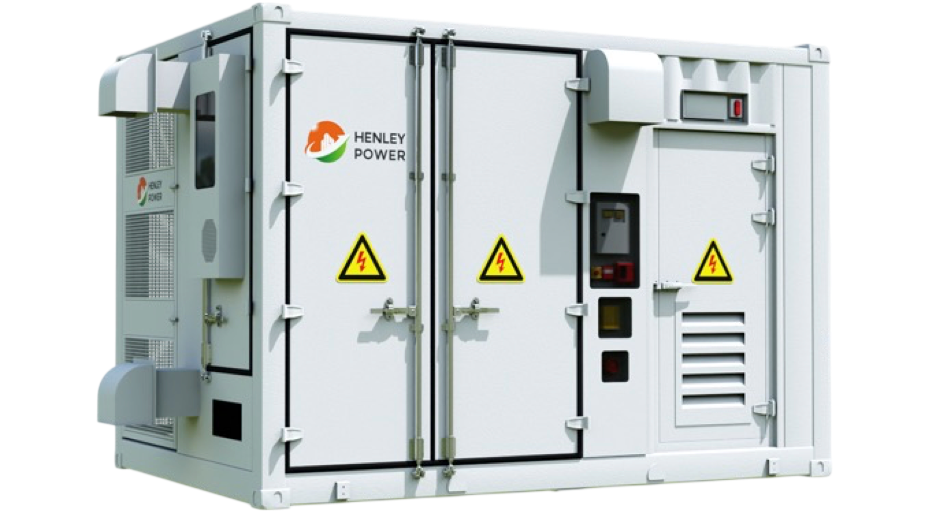
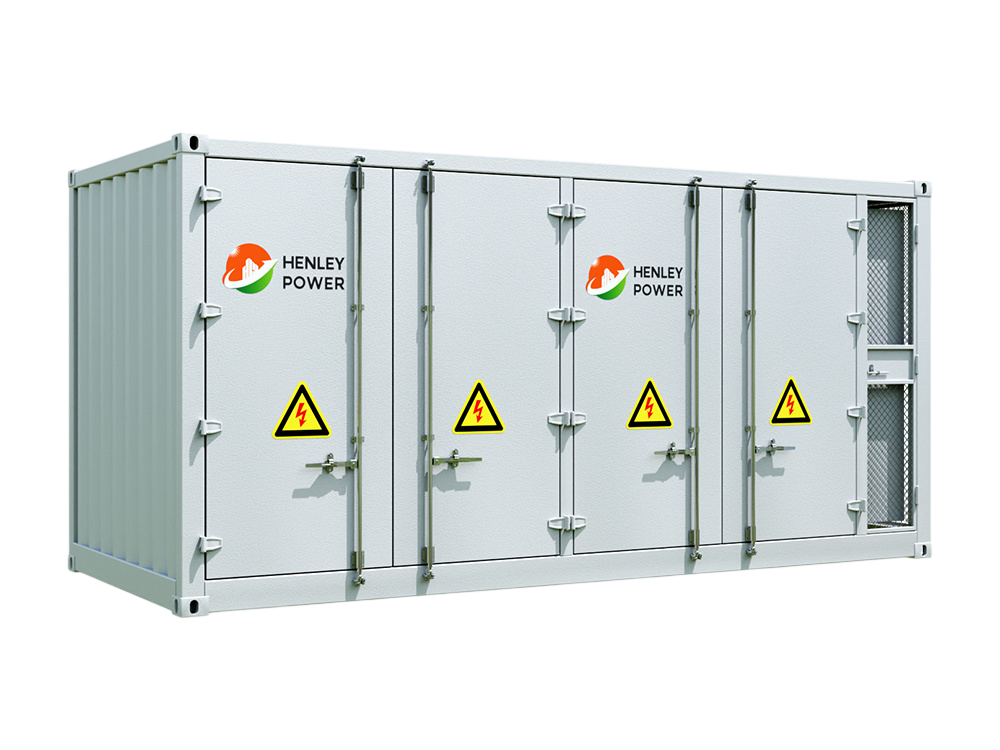
Mining camp 1–5 MW (residential plus auxiliary): typically 2–10 MWh BESS, often a single 2 MWh utility container or a paired 2 MWh + 5 MWh stack for longer autonomy. Processing plant 5–20 MW: 10–40 MWh, multi-container 5 MWh deployment with redundant PCS. Major mine 20–100 MW: 40–200 MWh, multi-substation distributed architecture. Starting points only — detailed sizing adds load duty cycle, PV resource, and genset fleet composition.
05 — RECOMMENDED HENLEY PLATFORM
06 — REFERENCE PROJECTS
Note from engineering
Henley Power’s deployed portfolio includes a Sahel-region PV-storage-diesel microgrid in Chad — engineering-equivalent to a small mining-camp deployment, with the same diesel-displacement and motor-start logic. Larger commissioned mining-specific references are in development. Chinese provincial deployments are utility solar-plus-storage and grid-scale projects.
The mining and remote industrial use case shares its hardware envelope with PV-storage-diesel hybrids: 2 MWh and 5 MWh containerized blocks, grid-forming PCS as standard, ruggedized for high ambient temperature and dust ingress. The differences are in dispatch logic and motor-start tuning, not in the container or the cell stack. Pre-commissioning mining feasibility studies and the Chad project technical pack are shared after NDA on request.
If your project needs a fully mining-deployed reference site as a pre-condition to specification, we’ll say so openly rather than over-promise. DFI documentation, IEC test reports, and mining feasibility studies shared pre-bid under NDA. Browse current project portfolio →
07 — FAQ
08 — RELATED SOLUTIONS