Solutions · Commercial & Industrial · Peak Shaving

Peak Shaving & Demand Charge Reduction

Battery storage that cuts industrial demand charges 20–40% during 15-minute peak intervals. Stackable with time-of-use arbitrage and PV self-consumption. Cabinets engineered for European C&I sites.
What is peak shaving
A peak-shaving BESS discharges lithium-iron-phosphate cells during 15-minute peak demand intervals — the basis European DSOs use to set capacity charges (Netzentgelt in DE, oneri di sistema in IT, peajes in ES). Typical result: 20–40% cut on the demand charge with 4–7 year payback on that line alone, against current EU C&I tariff schedules. Henley Power supplies 261 and 418 kWh outdoor cabinets plus 3–5 MWh utility containers — manufactured in Shandong, China, serviced from Romania.

01 — THE PEAK-SHAVING CASE

Why industrial sites add batteries to cut demand charges

European industrial electricity bills aren’t dominated by energy any more — they’re dominated by demand and capacity charges. Across DE (BNetzA), IT (ARERA), ES (CNMC), FR (CRE), the UK (Ofgem), and PL (URE), the demand portion now accounts for 30–50% of the bill at typical mid-size industrial loads. Cutting kWh consumption alone won’t fix it. Cutting peak kW will.

Capacity tariffs are the dominant cost lever now. German Netzentgelt (regulated by BNetzA), Italian oneri di sistema (ARERA), Spanish peajes by tramo horario (CNMC), French TURPE (CRE), and equivalent capacity-tariff structures set demand charges on the highest 15-minute interval of the billing period. BNetzA’s Monitoring Report 2024 records industrial network tariffs rising about 25% year-on-year into 2024, capping a multi-year upward trend across Germany. Eurostat industrial-electricity data through 2025 confirms the same direction in IT, ES, FR. One outlier afternoon dragged by simultaneous compressor and HVAC start-up sets the demand bill for the whole month. Battery discharging during the predicted peak interval flattens the curve and resets the billing-relevant maximum to the capped value the operator chooses.

Time-of-use arbitrage stacks on top. Most European C&I tariffs combine capacity charges with time-of-use energy pricing: peak/shoulder/off-peak banding measured in 15-minute or hourly intervals. The same BESS that flattens demand also charges during off-peak hours and discharges into shoulder and peak windows. The two revenue layers don’t compete at the operating level; they share the same battery and stack on the same bill.

Self-consumption keeps the third loop running. Sites with solar PV upstream of the metering boundary use the BESS to push self-consumption from typical 30–50% (PV-only) up to 70–85%. Capacity-charge avoidance and export-tariff loss avoidance stack on the same battery without operating conflict.

02 — WHAT THE BATTERY DOES

Four revenue paths, one platform

Demand charge cut

Discharge during the predicted 15-minute peak interval. The capped peak resets the billing-relevant maximum. Typical 20–40% reduction in the demand portion of the bill, depending on tariff structure.

Time-of-use arbitrage

Charge during off-peak (typical 02:00–06:00), discharge during shoulder and peak windows. Stacks on top of demand-charge avoidance, with no operating conflict: same battery, same site.

PV self-consumption uplift

Push solar self-consumption from 30–50% (PV-only) to 70–85% (PV+BESS). Avoids depressed export tariffs and reduces grid-import demand simultaneously. Two revenue lines, one battery.

Backup ride-through

Optional islanding capability for production-critical loads. Bridges short utility outages and brownouts that would otherwise trip continuous-process equipment — pumps, extruders, automated lines.

03 — INTEGRATION ARCHITECTURE

Three ways to wire it

C&I peak-shaving BESS doesn’t fit a single architecture. The right configuration depends on whether the site has upstream PV, whether the operator wants islanding capability, and whether the BESS is metered as a separate revenue stream. The platform constants don’t change between modes: Tier-1 LFP cells from publicly listed manufacturers, multi-supplier homologated; grid-forming PCS as standard across all utility BESS containers; IEC 61850-7-420 DER profile support — project-specific edition confirmed at commissioning.

Mode A

Behind-the-meter integrated

BESS cabinet wired between the utility feed and the site distribution. Integrated PCS handles charge/discharge based on the demand-prediction algorithm. Easiest install on existing sites. Default for industrial loads 100 kVA – 5 MVA.

Default

Mode B

DC-coupled with PV

BESS DC bus tied to the existing solar PV array’s DC link. Higher round-trip efficiency on PV-to-storage paths. Typical for greenfield projects where the operator builds PV and BESS together, and for retrofits where the PV inverter has spare DC capacity.

Mode C

Behind-the-meter with islanding

BESS provides backup ride-through for production-critical loads in addition to peak-shaving duty. Used in continuous-process plants where utility brownouts cause expensive process trips. Same cabinet, additional islanding logic and ATS hardware.

04 — SIZING LOGIC

How to size a peak-shaving BESS

Three levers drive the sizing study. Get them wrong and the BESS either oversized for capex or undersized for the operator’s bill-reduction target.

Lever 01

Peak load delta (kW)

Difference between the demand-charge cap target and the typical site peak. Sets the BESS power rating. PCS sized to peak delta, not nameplate site load.

Lever 02

Peak duration (minutes)

Length of the typical peak event. C&I peaks are usually 15–90 minutes; sets the energy stack. Tariff resolution (15-min vs hourly) factors in here too.

Lever 03

Peak frequency (events/month)

How often peak events occur. Drives the cycle-count expectation and the depth-of-discharge envelope. High-frequency sites push toward longer-duration energy stacks.

Rule of thumb

1 MVA industrial site with 200 kW peak excess above the cap target: typically a 200–400 kW / 250–500 kWh BESS, often a single C&I 261 kWh outdoor cabinet. 5 MVA process plant with 800 kW peak excess: typically 800–1,200 kW / 1.5–2.5 MWh, often using two C&I 418 kWh cabinets in parallel. These are starting points for feasibility, not engineering numbers — actual sizing factors in the operator’s tariff structure, load profile resolution, and PV co-location.

Got an industrial site with a demand-charge bill problem? We'll back-test the saving with you.

05 — RECOMMENDED HENLEY PLATFORM

Three product blocks

The C&I cabinets and utility containers share the same cell architecture, BMS protocol, and PCS topology. Selection between the 261 and 418 kWh outdoor cabinets and the 3–5 MWh utility container comes down to the peak load delta, duration target, and site footprint.

C&I · LIQUID-COOLED

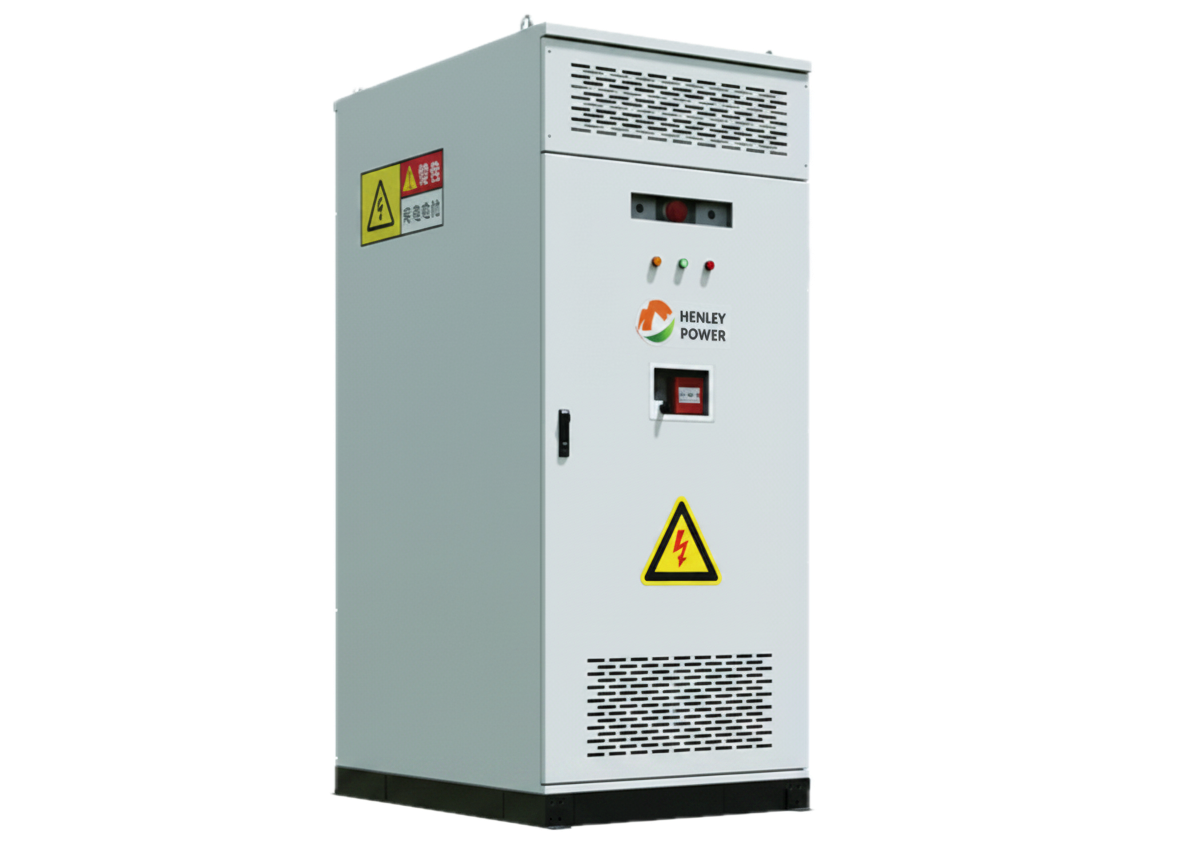
HLY-BESS-Commercial-Industrial-261kWh

261 kWh in a single liquid-cooled cabinet.

261 kWh

Liquid-cooled outdoor cabinet, three deployment modes — All-in-One (100/110/125 kW PCS), DC-only for central PCS, or hybrid-inverter compatible.

View product

C&I · LIQUID-COOLED

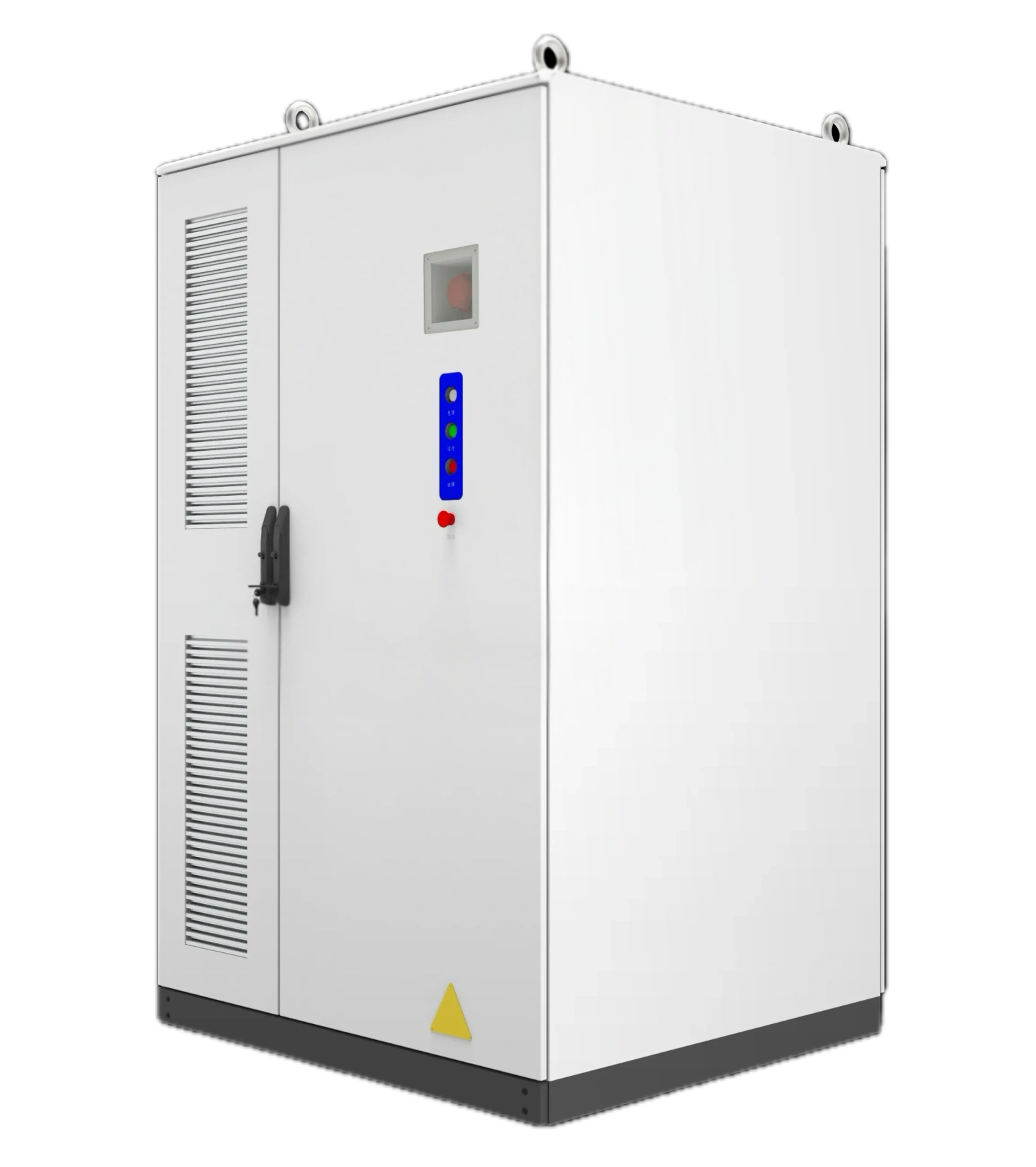
HLY-BESS-Commercial-Industrial-418kWh

200 kW / 418 kWh in one outdoor cabinet.

418 kWh

200 kW / 418 kWh liquid-cooled outdoor cabinet at 1,331 Vdc — industrial peak-shaving, data centres, large commercial portfolios.

View product

UTILITY

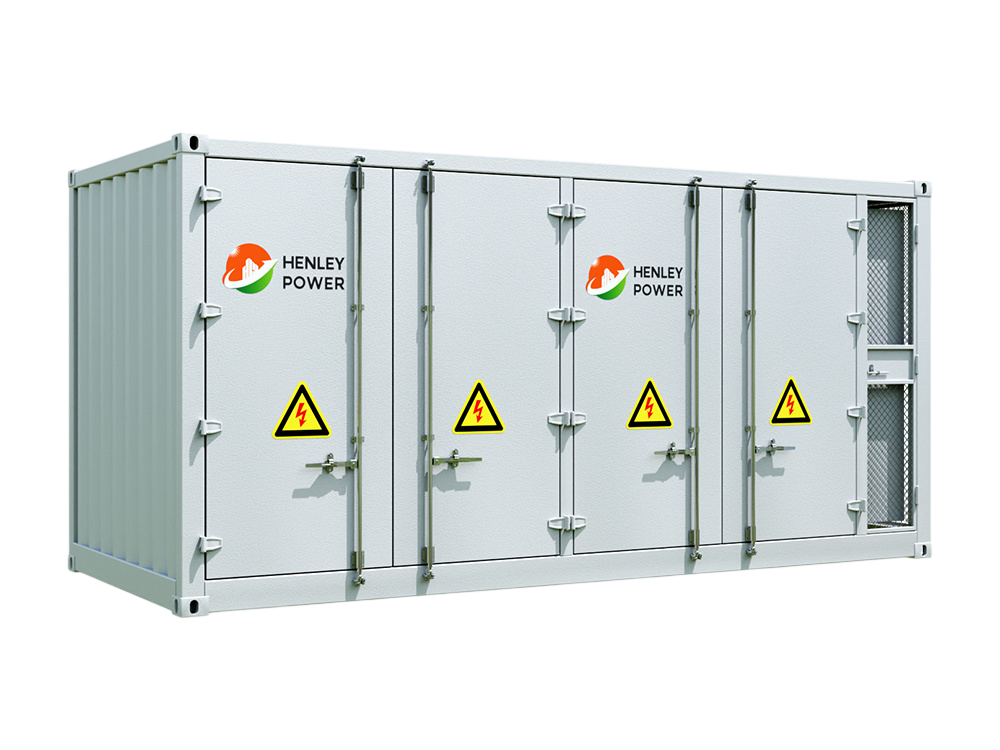
HLY-BESS-Utility-3MWh · 4MWh · 5MWh

Utility-Scale BESS — 3 to 5 MWh Liquid-Cooled Container.

3–5 MWh

3,344 / 4,180 / 5,015 kWh liquid-cooled LFP in 20-ft ISO containers — grid-scale storage, frequency response, BESS-as-a-service.

View product

06 — REFERENCE PROJECTS

Honest about where we are

Note from engineering

Henley Power’s deployed portfolio to date is dominated by utility solar-plus-storage and PV-storage-diesel hybrids — Inner Mongolia, Ningxia, Hebei, Henan, Shandong provinces in China, plus a Sahel-region microgrid in Chad. Dedicated C&I peak-shaving reference projects in Europe are in commissioning across Romania, Czech Republic, and Slovakia.

The C&I cabinets share the same cell architecture, BMS protocol, and PCS topology as the utility platform. Deployment differences live in site SCADA integration, demand-prediction logic, and local DSO interconnection — not in the cells. Pre-commissioning C&I references and integration studies are shared after NDA on request.

If your project needs a fully European-deployed C&I reference site as a pre-condition to specification, we’ll say so openly rather than over-promise. Browse current project portfolio →

07 — FAQ

Common questions

How does peak shaving cut my demand charge?
The demand portion of a European C&I electricity bill is set by the highest 15-minute interval consumed during the billing period. Peak shaving uses the BESS to discharge during predicted peaks, capping the registered maximum at a chosen lower value. The capacity tariff is then calculated against that capped value rather than the unmitigated peak. Reduction is typically 20–40% on the demand portion of the bill, depending on tariff structure and load profile.
4–7 years on demand-charge avoidance alone in DE / IT / ES / UK markets, dropping to 3–5 years when TOU arbitrage and PV self-consumption uplift are stacked on top. Payback shortens further on sites with regular 15-minute interval excursions of more than 100 kW above the target cap, where the BESS prevents one outlier event from setting the whole monthly bill.
Warranty insurance via licensed European insurer is available as a project option for DFI-financed and institutionally-backed tenders. Parent guarantee or escrow alternative on request.
Yes. Retrofit deployment behind the existing meter is the most common configuration. The BESS coordinates with the PV inverter via the site SCADA or directly via Modbus TCP or open DER protocol profiles. Self-consumption ratio typically rises from 30–50% (PV-only) to 70–85% (PV+BESS), with the demand-charge reduction stacking on top of the export-avoidance gain.
Start with the difference between the typical site peak and the cap target the operator wants to achieve, multiplied by the typical peak duration (15–90 minutes for most industrial loads). PCS sized to the peak delta in kW, energy stack sized to peak delta times duration in kWh. Refine after running 12 months of 15-minute interval data through a back-test. Detailed sizing studies released after NDA execution.

08 — RELATED SOLUTIONS

Adjacent applications

The same BESS platform deploys across C&I, data-centre, and renewable-generation use cases. Three closest siblings to peak-shaving.

MINING

MINING · DIESEL OFFSET

Mining & Remote Industrial Storage

Battery storage for off-grid mines, oil and gas, construction camps, and remote industrial operations — diesel offset, spinning reserve, energy autonomy.

View solution

HYBRID

HYBRID · FUEL OFFSET

Hybrid Power Plant Battery Storage

Solar PV plus diesel or gas generators plus battery storage for off-grid mines, islands, and remote industrial loads — fuel savings 30–60%.

View solution

MICROGRID

MICROGRID · ISLAND OPERATION

Microgrid & Off-Grid Battery Storage

Islanded and grid-tied microgrids for islands, remote communities, military bases, and isolated industrial sites — full energy independence with renewable integration.

View solution