/

/

Taibus Banner Utility BESS

Inner Mongolia · 100 MW / 250 MWh · Commissioned Q4 2024

Taibus Banner Utility BESS — 100 MW / 250 MWh Grid-Side Battery Storage

The Taibus Banner Utility BESS is a 100 MW / 250 MWh grid-side battery storage project commissioned by Henley Power in Q4 2024 for an Inner Mongolia provincial development fund in Xilingol League. The system integrates with the regional wind fleet, cuts curtailment across the Taibus Banner substation cluster, and defers grid capacity investment the province’s renewables buildout would otherwise force. Inner Mongolia’s renewable capacity reached 135 GW by end-2024, the first major coal-producing province in China where renewables overtook coal-fired power.

PROJECT OVERVIEW

250 MWh grid-side storage for wind curtailment reduction and renewable integration in Xilingol League

Taibus Banner sits in Xilingol League, the southeastern edge of Inner Mongolia’s grassland plateau — a region that has become one of China’s primary wind development corridors. Inner Mongolia added over 41 GW of new renewable energy capacity in 2024 alone, bringing the province’s total renewables to 135 GW by year-end and making it the first major coal-producing region in China where renewable capacity overtook coal-fired power. The western Inner Mongolia spot market has been operating in continuous trial since 2022, moving to official operation in February 2025. A province building wind at that pace needs storage to manage what the grid can’t absorb — and Xilingol is precisely the area where grid transmission headroom to the Beijing-Tianjin-Hebei load center is the binding constraint.

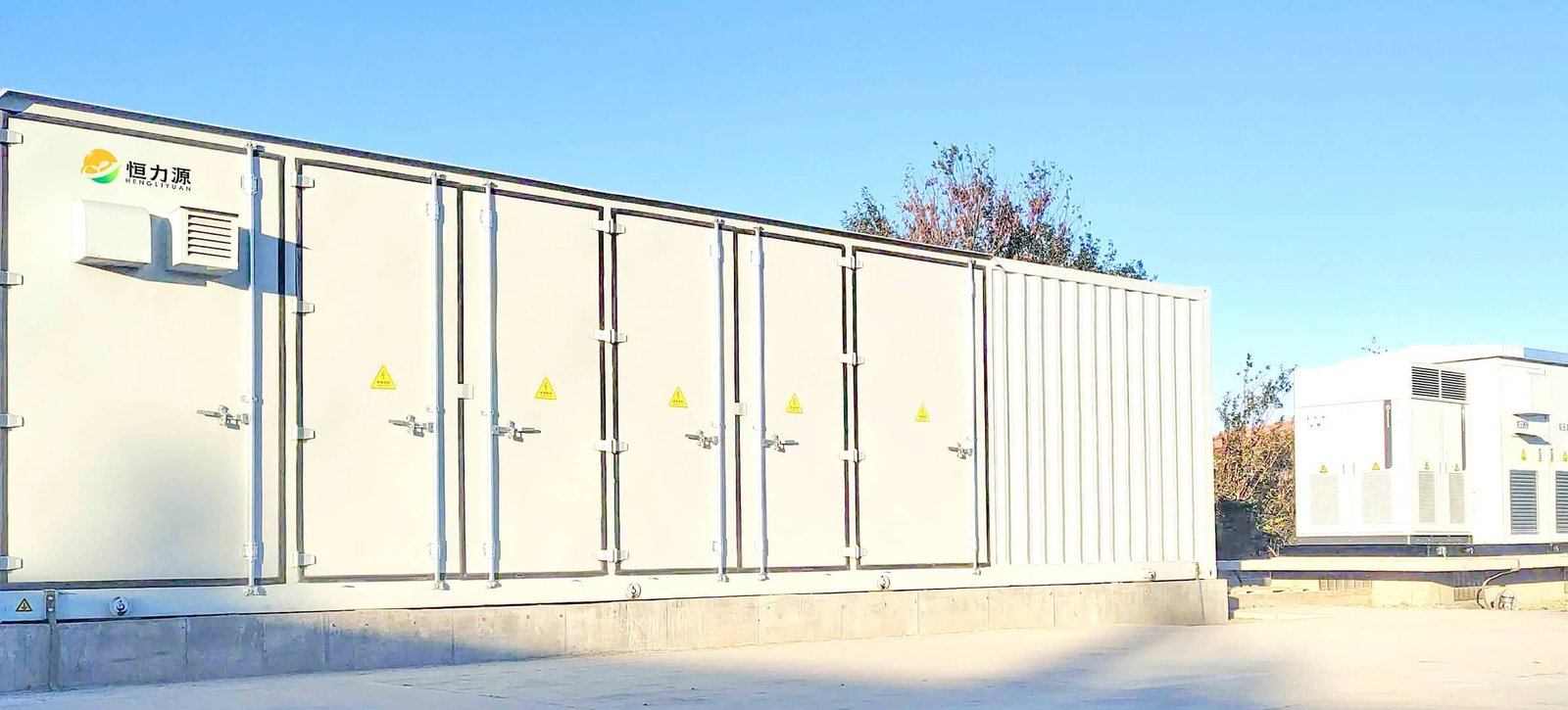
The provincial development fund’s commission was sized for the problem, not for a round number. At 100 MW / 250 MWh (50 × HLY-BESS-Utility-5MWh blocks in 4 PCS array clusters at the regional MV bus), the 2.5-hour discharge duration maps to the evening wind ramp window: the period when wind generation drops as the load curve rises, and when Inner Mongolia’s spot price spreads are widest. Grid-following PCS architecture with per-block fault isolation keeps the system’s availability ceiling high without requiring central-array shutdown for single-block events. Factory acceptance testing was completed at Henley Power’s Dezhou site under the fund’s engineering supervision, commissioned in 2024 at the Taibus Banner substation cluster after site acceptance testing on connection to the regional MV bus. Liquid-cooled thermal management handles Xilingol’s continental climate — winter temperatures regularly below −20 °C and summer peaks above 33 °C — without performance degradation at either extreme. Frequency regulation, capacity firming, and AGC participation sit on the same revenue stack alongside curtailment reduction, subject to dispatch operator qualification per Inner Mongolia’s ancillary services market rules.

Development funds run institutional procurement. The fund’s tender evaluation required IEC test reports under NDA, multi-supplier cell homologation records, FSR documentation aligned to the project’s revenue stack, and a warranty structure that carries through to any future refinancing round. Two of the four shortlisted bidders were BloombergNEF-listed integrators. Henley Power was selected on platform fit, documentation depth, and the insurance-backed warranty pathway — a licensed European insurer behind the manufacturer warranty, not a promise backed by a balance sheet the fund had no visibility into. BloombergNEF (2024) reported China’s turnkey BESS prices fell to roughly $85/kWh on average for 4-hour systems — the lowest globally — and that’s the capital-cost basis the fund’s deferral-value NPV was modelled against. Cell sourcing is Henley Power’s standard: Tier-1 LFP cells from publicly listed manufacturers, multi-supplier homologated — documented under NDA in the project bankability dossier and never on public pages. The system has been operating since commissioning in Q4 2024, collecting curtailment-reduction, capacity-deferral, and grid-support-availability telemetry for a Q4 2026 joint 24-month performance disclosure window.

PAIN POINTS ADDRESSED

Three problems this project solved

01

Wind curtailment without grid-side storage

Inner Mongolia’s wind buildout outpaces the transmission infrastructure to eastern load centres. The grid connecting Xilingol League to the Beijing-Tianjin-Hebei corridor has limited headroom at peak wind generation hours — typically mid-morning and late night — when load is below wind output. Without storage at the substation level, that generation isn’t dispatched — it gets curtailed. The 250 MWh system absorbs surplus wind generation during curtailment-risk windows and injects it into the evening demand peak when spot prices are highest and the transmission line is under its capacity limit. That’s the gap the provincial development fund was commissioned to close.

02

Grid capacity investment deferral

Inner Mongolia transmitted over 60 billion kWh to other regions in 2024, and the province’s renewables capacity is still growing. Without storage at the substation level, continued renewables additions require grid upgrade capital — new transformers, line reinforcement, protection upgrades — to handle the increased peak injection. A 100 MW BESS absorbing and re-dispatching generation defers that substation upgrade for the portion of the load growth the storage system can manage. The fund modelled the deferral value against the upgrade cost; the storage project won on NPV. That’s not a green-energy story — it’s a capital allocation decision.

03

Development fund procurement documentation standard

Development funds apply the same procurement documentation standards as DFI-financed projects: IEC test reports, multi-supplier cell homologation evidence, FSR documentation, and a warranty pathway with institutional backing. Henley Power’s insurance-backed warranty — direct manufacturer warranty backed by a licensed European insurer — met the fund’s procurement requirements without post-award renegotiation. The documentation package was delivered at contract award. The fund’s legal team needed a warranty that would survive scrutiny in any future project-finance refinancing or audit process; a direct manufacturer warranty without an insurer backstop wouldn’t have cleared that review.

SITE DOCUMENTATION

Site photography

Site photography pending public release · Q3 2026 1 / 1

PROJECT FAQ

Questions buyers ask about this project

What was deployed at Taibus Banner?
Henley Power deployed 250 MWh of grid-side utility BESS at 100 MW rated power, commissioned in Q4 2024 for an Inner Mongolia provincial development fund in Xilingol League. The configuration is 50 × HLY-BESS-Utility-5MWh containerized blocks in parallel at the regional MV bus, with grid-following PCS architecture and per-block fault isolation. The system runs wind curtailment reduction, renewable integration, and grid capacity deferral at 2.5-hour discharge duration.
Development funds apply the same procurement documentation standards as DFI-financed projects: IEC test reports, multi-supplier cell homologation evidence, FSR documentation, and a warranty pathway with institutional backing. Henley Power’s insurance-backed warranty — direct manufacturer warranty backed by a licensed European insurer — met the fund’s procurement requirements without post-award renegotiation. The platform fit was direct: 50 × HLY-BESS-Utility-5MWh at 2.5-hour duration aligns with Inner Mongolia’s evening wind ramp window that the system was commissioned to manage. Two of the four shortlisted bidders were BloombergNEF-listed integrators; Henley Power was selected on documentation depth and contracting structure.
The project follows Henley Power’s standard 5+5-year direct manufacturer warranty. Warranty insurance via licensed European insurer is available as a project option for DFI-financed and institutionally-backed tenders. Parent guarantee or escrow alternative on request. The Taibus Banner project moved under insurance-backed pathway, aligned with the development fund’s institutional procurement framework.
Honest answer: not yet at full disclosure. The project commissioned in Q4 2024 and the 24-month performance dataset matures in Q4 2026 — that’s the joint disclosure window. Until then, design-case framing references Inner Mongolia’s published renewable buildout — 41 GW added in 2024 alone, 135 GW total by year-end, and over 60 billion kWh exported to other regions in 2024 — as the curtailment-pressure and grid-deferral benchmarks the project was sized against. Wind curtailment telemetry, capacity deferral realization, and grid support availability data are being collected and will be released at the Q4 2026 window. Full documentation available on request, subject to NDA, via Henley Power’s bankability desk.
Yes — reference availability on request after a mutual NDA. The development fund operator has agreed to participate in reference discussions for qualifying utility and institutional tender processes. Site visit scheduling is subject to operational access coordination with the fund. Contact Henley Power’s bankability desk to initiate the reference process.

Related Henley Power products

Products deployed or relevant to this configuration

T&D PORTFOLIO

Power Transformers · Substations · RMU · Switchgear

Power infrastructure for energy projects across Europe and Africa.

50 kVA – 180 MVA

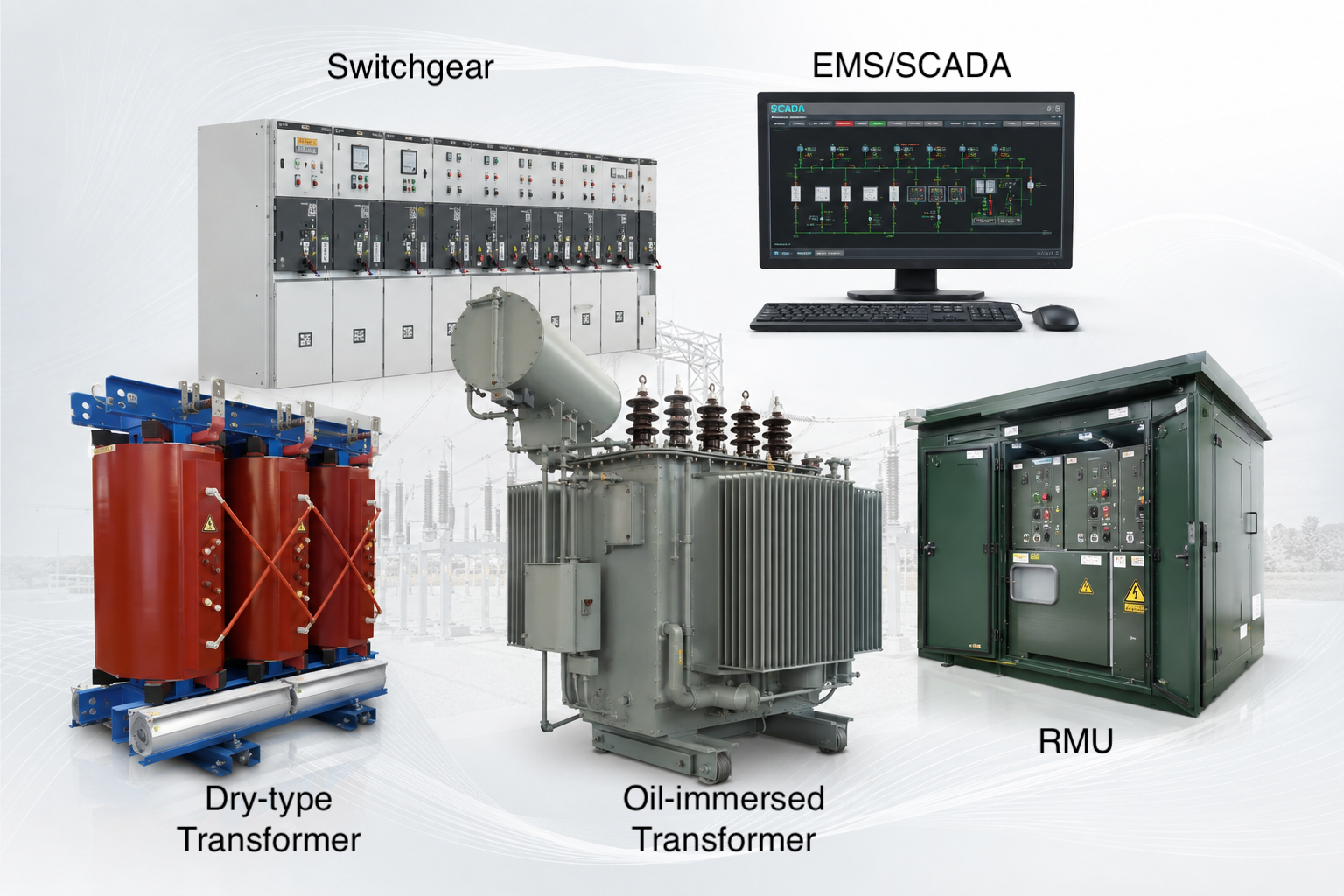
Power transformers 10–220 kV, box-type substations, ring main units to 40.5 kV, MV/LV switchgear. Pre-paired to Henley Power BESS at spec stage.

View product

UTILITY

HLY-BESS-Utility-2MWh

Utility-Scale BESS — 2 MWh Containerised.

2 MWh

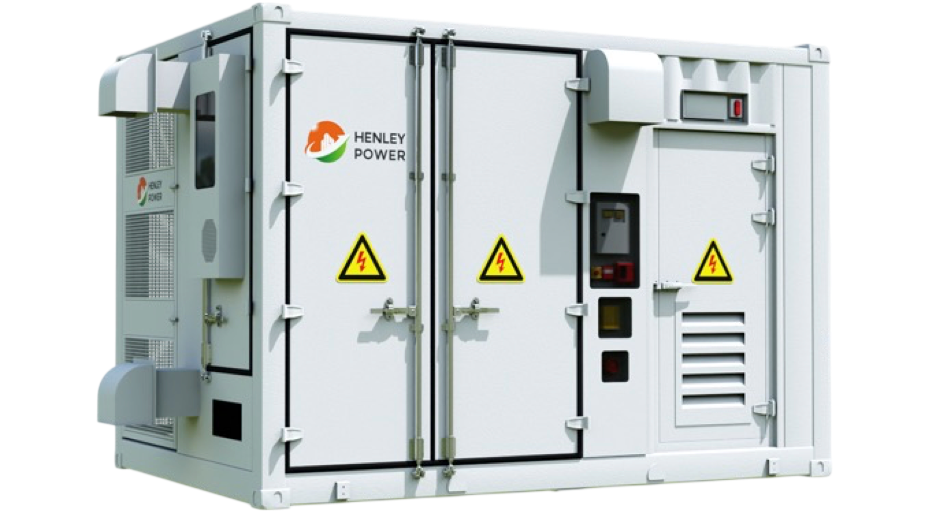
2,232 kWh liquid-cooled LFP in a 20-ft ISO container — IPP solar farms, wind balancing, utility substations.

View product

UTILITY

HLY-BESS-Utility-3MWh · 4MWh · 5MWh

Utility-Scale BESS — 3 to 5 MWh Liquid-Cooled Container.

3–5 MWh

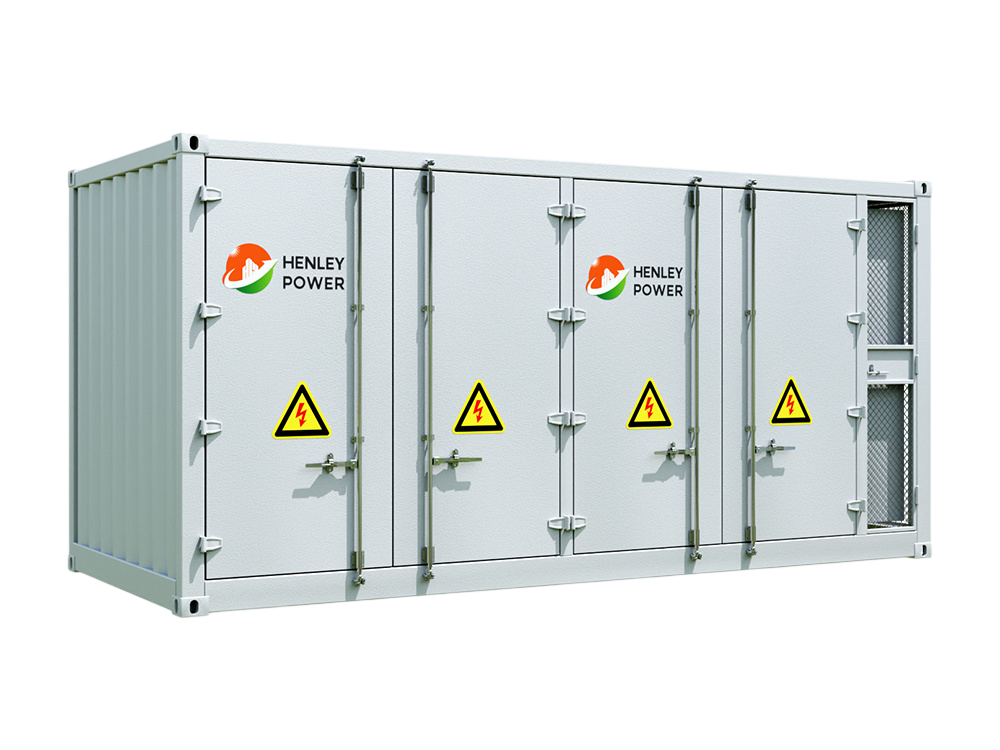
3,344 / 4,180 / 5,015 kWh liquid-cooled LFP in 20-ft ISO containers — grid-scale storage, frequency response, BESS-as-a-service.

View product

Related projects

Other Henley Power deployments

Chad Township Microgrid

Chad · 8 MW / 16 MWh + 4 MW PV · Commissioned 2025

View Project

Hebei Shopping Mall BESS

HEBEI PROVINCE . 1.6 MW / 3.34 MWH . COMMISSIONED 2025

View Project

Inner Mongolia Mining BESS

Inner Mongolia · 150 MW / 300 MWh · Commissioned 2024

View Project