01 — THE SOLAR-PLUS-STORAGE CASE
Utility-scale solar economics have shifted twice in the last decade. First merchant LCOE undercut conventional generation; then capture-price collapse and inverter clipping took back a chunk of the operating margin. Storage converts the duck curve from a problem into a revenue stream.
Capture-price collapse is the dominant economic loss. Across Spain, Italy, Greece, and Germany during 2024–2025, midday solar capture prices repeatedly hit zero or went negative on high-irradiance days (SolarPower Europe EU Market Outlook 2025–2030; ENTSO-E Transparency Platform spot-price data, 2024–2025). Storage shifts the energy out of the noon collapse window into the evening peak hours, where the capture price holds.
Inverter clipping eats nameplate generation. Modern utility PV plants are built with DC/AC ratios of 1.3–1.5 to harvest more morning and afternoon energy. The trade-off is hard-clipping at midday when DC output exceeds inverter AC nameplate. Co-located storage on the DC side captures the clipped energy directly.
Capacity firming and ancillary services close the third loop. ENTSO-E network code requirements increasingly push variable-renewable plants toward dispatchable delivery profiles. PPA buyers pay premiums for shaped delivery. A BESS sized at 2–4 hour duration converts stochastic PV output into a profile the offtaker can model and bid forward, while the PCS qualifies the plant for FCR-D, FFR, and aFRR participation on the same interconnection envelope.
02 — WHAT THE BATTERY DOES


03 — INTEGRATION ARCHITECTURE
Mode A
Mode B
Mode C
04 — SIZING LOGIC
Lever 01
Lever 02
Lever 03
Rule of thumb
50–100 MW utility solar plant: typically a 25–50 MWh BESS with PCS sized to 25–40% of PV nameplate. 200–500 MW solar park: typically 100–250 MWh distributed across multiple substations, with AC vs DC coupling driven by the inverter vendor’s DC-side capability and the clipping profile. Starting points for feasibility — detailed sizing studies use irradiance back-tests, capture-price curves, and PPA shaping clauses.
05 — RECOMMENDED HENLEY PLATFORM
06 — REFERENCE PROJECTS
Note from engineering
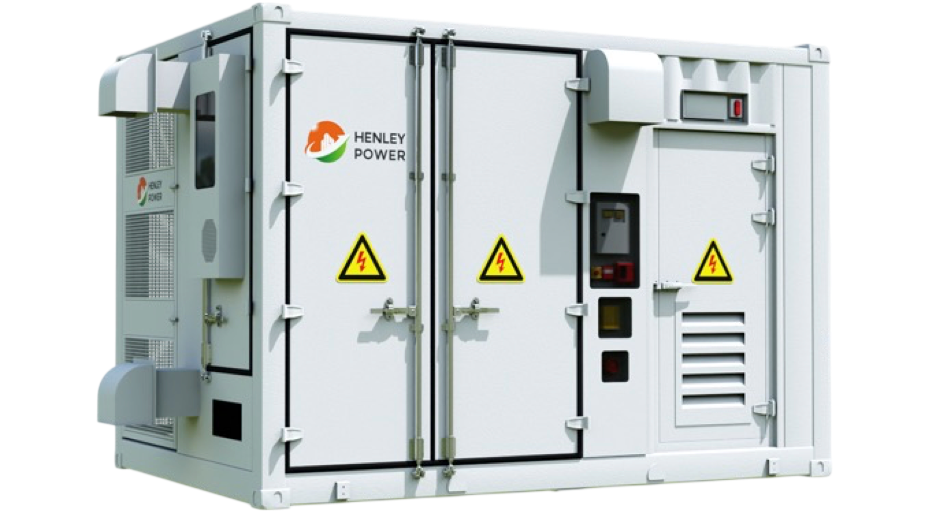
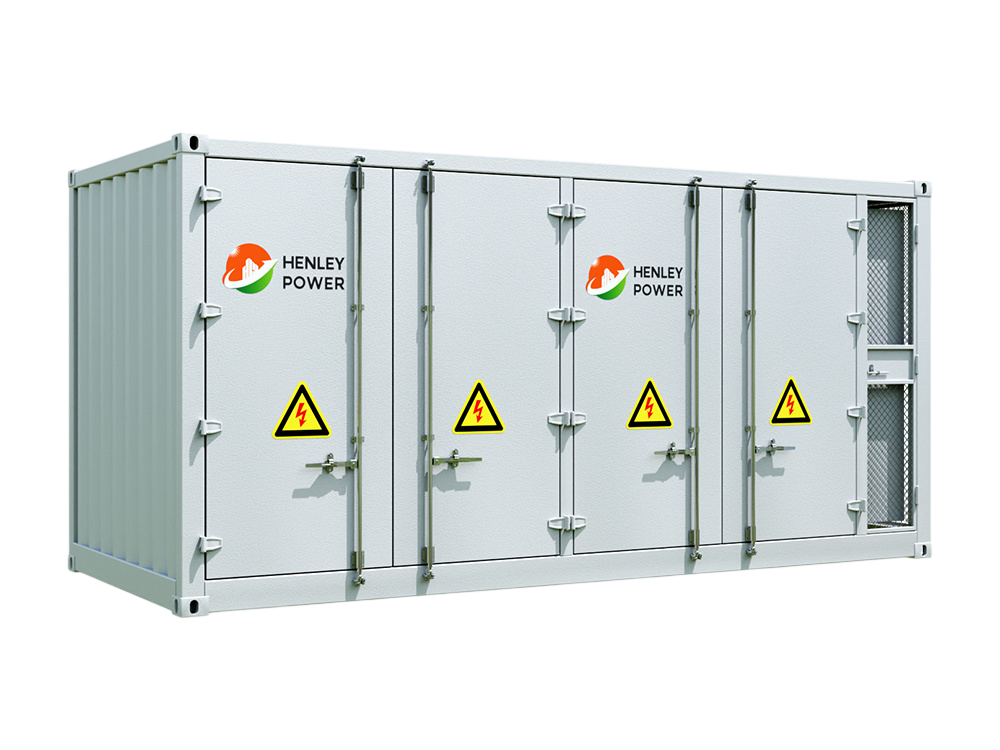
Solar-plus-storage is the configuration Henley Power has deployed most. The current portfolio includes utility solar+storage and PV-storage-diesel hybrid plants commissioned across Inner Mongolia, Ningxia, Hebei, Henan, and Shandong provinces in China, plus a Sahel-region microgrid in Chad with PV+diesel+BESS. The 3 MWh, 4 MWh, and 5 MWh containerized blocks proposed for European projects are the same blocks running in those plants today.
European utility solar+BESS reference projects are in commissioning across multiple ENTSO-E bidding zones — the engineering differences live in ENTSO-E interconnection paperwork and TSO-specific qualification, not in the platform itself. Pre-commissioning European references and project case studies are shared after NDA on request.
If a project pre-condition requires an EU-deployed reference plant rather than a deployed-in-China analogue, we’ll say so rather than over-promise. Browse current project portfolio →
07 — FAQ
08 — RELATED SOLUTIONS