MW-Scale Energy Storage · 9-Region Service Network

Battery Storage for Wind Farms

Battery storage paired with onshore and offshore wind. Curtailment recovery, output smoothing, ancillary services revenue. Utility BESS platform engineered for European wind plant integration.
What is battery storage for wind farms
Battery storage for wind farms pairs lithium-iron-phosphate batteries with onshore and offshore wind plants. The point is curtailment recovery (German offshore wind curtailment peaked near 24% of actual production in 2023; national aggregates run materially lower) plus a second revenue stream from FCR-D, FFR, and aFRR participation. Henley Power supplies the utility platform in 2 MWh and 5 MWh containerized blocks, AC-coupled by default, with grid-forming PCS as standard and IEC 61850-7-420 DER profile support. Manufactured in Shandong, China. European projects serviced from Romania.

01 — THE WIND-PLUS-STORAGE CASE

Why wind operators add batteries

Wind isn’t a curtailment-free generation source anymore. National aggregate curtailment runs single-digit across most European markets, but the picture changes in wind-dense bidding zones during high-generation low-demand hours. German offshore wind saw curtailment peak near 24% of actual production in 2023 — driven by redispatch and heavy congestion episodes. The economics that drove the merchant wind boom now require the operator to either accept the loss or build storage at the same connection point.

Curtailment is the dominant economic loss. ACER and the ENTSO-E Transparency Platform both track curtailment and redispatch trends rising across grid-constrained zones, with Germany taking the heaviest absolute hit and offshore wind absorbing a disproportionate share during redispatch hours. PPAs and CfD contracts typically cover only part of the lost revenue. Storage co-located on the wind farm’s DC link or AC connection captures the otherwise-clipped energy and discharges it back into the grid during higher-priced hours, recovering revenue that would otherwise evaporate at the substation breaker.

Ancillary services have become the second revenue layer. Wind operators bidding into balancing markets need fast-response capacity to qualify for FCR-D, FFR, aFRR, and mFRR. The wind plant alone can’t deliver sub-second response under the ENTSO-E network code requirements that frame these markets. A battery sized for the AC connection point provides that response within the same interconnection envelope — and stacks the revenue on top of the wind PPA without competing with it.

02 — WHAT THE BATTERY DOES

Four revenue paths, one platform

Output smoothing

Sub-minute ramp suppression keeps the wind plant inside ENTSO-E network code limits without curtailing turbines. The battery absorbs gust transients and releases them on the discharge side.

Curtailment recovery

Soak up clipped energy during high-generation low-price windows. Discharge during peak price hours. Net effect is direct revenue recovery against the curtailment volume the wind plant would otherwise lose at the substation breaker.

Ancillary services

FCR-D, FFR, aFRR, and mFRR participation through grid-forming PCS, stacked on top of the wind PPA. ENTSO-E network code compatibility, with TSO-specific qualification at commissioning.

Capacity firming

Convert variable wind into PPA-deliverable shaped output for utility offtakers. Sized for 2–4 hour discharge windows aligned to the contracted dispatch profile, not to nameplate availability.

03 — INTEGRATION ARCHITECTURE

Three ways to wire it

Wind farm storage doesn’t require a single architecture. The right configuration depends on whether the project is greenfield or retrofit, the turbine vendor’s openness to DC integration, and how revenue stacking is contractually structured. The platform constants don’t change between modes: Tier-1 LFP cells from publicly listed manufacturers, multi-supplier homologated, and grid-forming PCS as standard across all utility BESS containers, with IEC 61850-7-420 DER profile support — project-specific edition confirmed at commissioning.

Mode A

Co-located AC-coupled

Standalone BESS containers wired to the same MV substation as the wind farm. Independent inverters, independent control. Easiest to retrofit, easiest to procure separately, easiest to expand. The default configuration for European onshore and most offshore deployments.

Default

Mode B

DC-coupled hybrid

Battery DC bus tied directly to the wind turbine DC link or back-to-back converter bus. Higher round-trip efficiency on internal energy paths. The trade-off is procurement coupling — the BESS becomes locked to the turbine OEM’s electrical envelope. Used selectively where the turbine vendor supports it.

Mode C

Standalone behind-PCC

BESS at the same point of common coupling as the wind farm but contractually independent — separate IPP entity, separate metering, separate revenue stack. Used when the wind PPA and the BESS arbitrage strategy are owned by different parties or financed through different vehicles.

04 — SIZING LOGIC

How to size a wind-coupled BESS

Sizing is driven by three levers, in order of dominance. The first one sets the energy nameplate; the second sets the power rating; the third sets the duration ratio.

Lever 01 — Energy

Curtailment volume (kWh/year)

Drives the MWh nameplate of the BESS. Back-test against at least 12 months of plant generation data and TSO curtailment logs.

Lever 02 · Power

Ancillary contract size (MW)

Drives the PCS power rating. Frame against the FCR-D, FFR, or aFRR contract MW commitment that the project intends to bid into.

Lever 03 — Duration

Offtaker shaping window (hours)

Drives the ratio of MWh to MW. PPA buyers asking for 2-hour or 4-hour shaped delivery push the BESS toward longer-duration architectures.

Rule of thumb

Onshore wind farm 50–100 MW: typically a 20–40 MWh BESS with PCS sized to the contracted ancillary-services MW commitment. Offshore wind farm 200–500 MW: typically 80–200 MWh distributed across multiple substations, with the architecture choice driven by the offshore platform’s converter topology. These are starting points for feasibility, not engineering numbers — detailed sizing studies factor in TSO interconnection rules, FCR/FFR price curves, and PPA shaping clauses on a project-specific basis.

Got a wind project on your desk? We'll run the curtailment numbers with you.

05 — RECOMMENDED HENLEY PLATFORM

Three containerized blocks

The utility BESS platform is generation-agnostic. The same containerized blocks ship to solar-plus-storage, wind-plus-storage, and standalone grid-scale projects. Selection between the 2 MWh utility block, the 5 MWh utility block, and the 418 kWh C&I container comes down to the curtailment volume, the duration target, and the substation footprint available at the wind plant.

C&I · LIQUID-COOLED

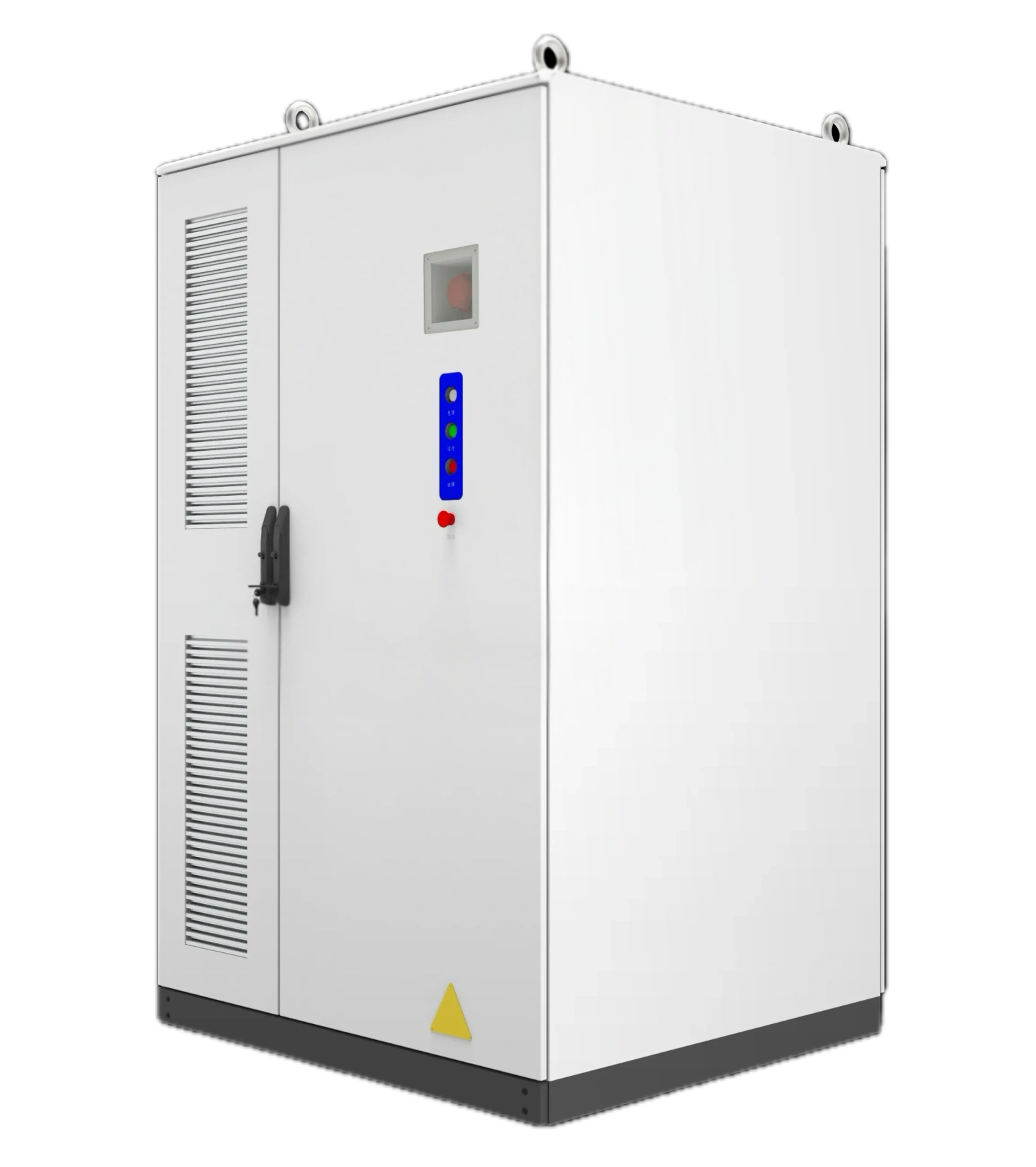
HLY-BESS-Commercial-Industrial-418kWh

200 kW / 418 kWh in one outdoor cabinet.

418 kWh

200 kW / 418 kWh liquid-cooled outdoor cabinet at 1,331 Vdc — industrial peak-shaving, data centres, large commercial portfolios.

View product

UTILITY

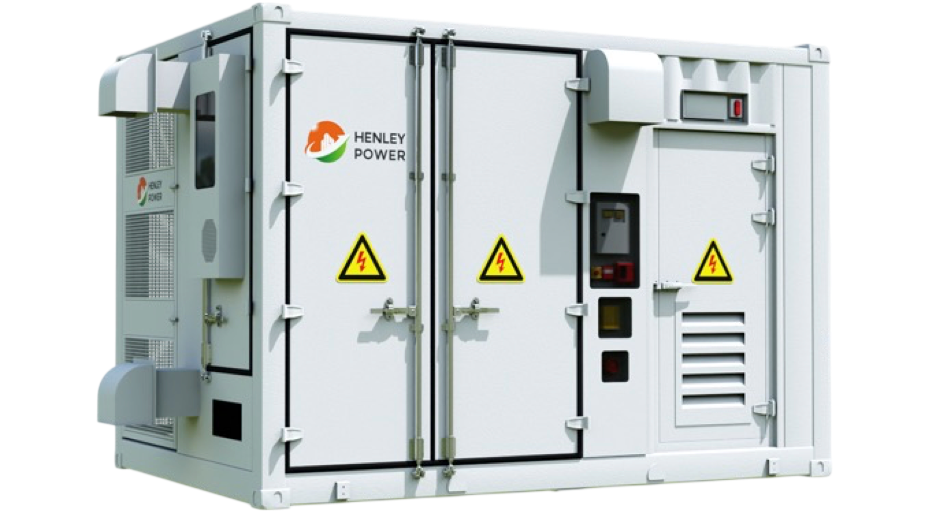
HLY-BESS-Utility-2MWh

Utility-Scale BESS — 2 MWh Containerised.

2 MWh

2,232 kWh liquid-cooled LFP in a 20-ft ISO container — IPP solar farms, wind balancing, utility substations.

View product

UTILITY

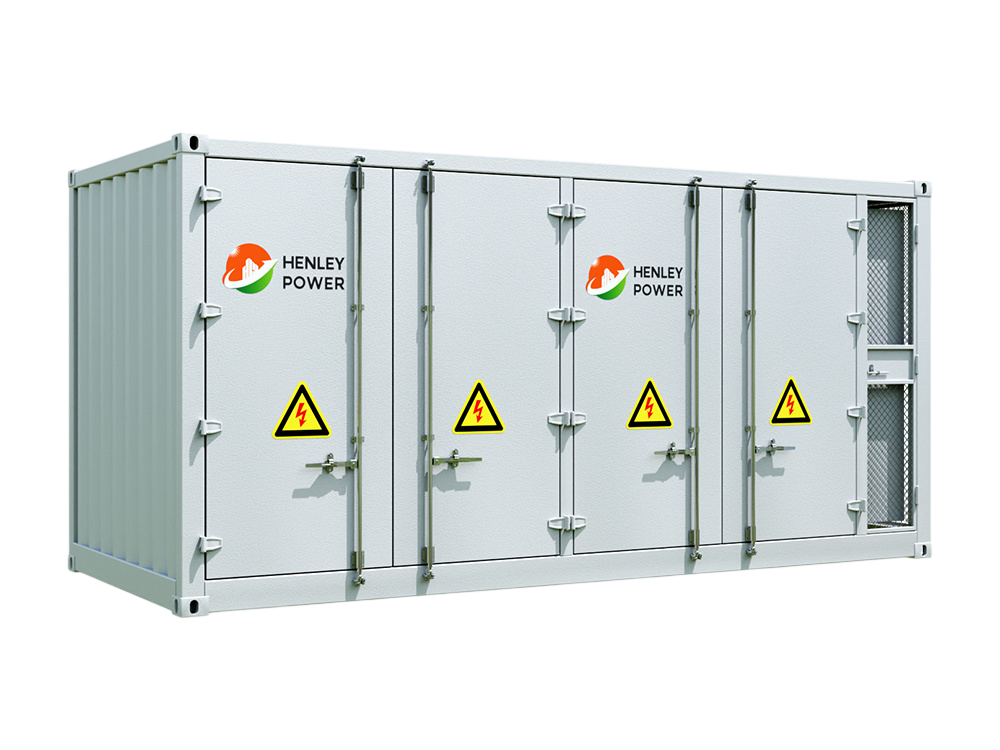
HLY-BESS-Utility-3MWh · 4MWh · 5MWh

Utility-Scale BESS — 3 to 5 MWh Liquid-Cooled Container.

3–5 MWh

3,344 / 4,180 / 5,015 kWh liquid-cooled LFP in 20-ft ISO containers — grid-scale storage, frequency response, BESS-as-a-service.

View product

06 — REFERENCE PROJECTS

Honest about where we are

Note from engineering

The closest direct analogue we’ve shipped to a wind+BESS project is utility solar-plus-storage and PV-storage-diesel hybrids — Inner Mongolia, Ningxia, Hebei, Henan, Shandong provinces in China, plus a Sahel-region microgrid in Chad. Across that deployed portfolio, the platform performance metrics that translate directly to wind+BESS — grid-forming PCS response time (sub-cycle on our containerised platform), curtailment-recovery dispatch logic, ENTSO-E network-code compliance work — are the same hardware and firmware path Henley engineers ship today. The container, the cell stack, the BMS protocol are generation-agnostic.

What we learned on the China utility ESS deployments that transfers directly to wind: the ramp-profile tuning developed for solar-plus-storage during 2023–2024 commissioning rounds maps almost 1:1 to wind-output ramp profiles. The EMS firmware paths for both run on the same dispatch-engine codebase. The curtailment-recovery dispatch logic technical brief is released on request — single-document NDA, not the full bankability package.

Wind-specific commissioned reference projects with our brand on the nameplate are in development across European bidding zones for 2026–2027. Pre-commissioning wind references and engineering studies are shared after NDA on request.

If your project needs a fully wind-deployed reference site with our brand on it as a pre-condition to specification, we’ll say so openly rather than over-promise. Browse current project portfolio →

07 — FAQ

Common questions

Why pair wind with battery storage when wind is already cheap energy?
Cheap LCOE doesn’t translate to cheap revenue when the clipped kWh aren’t paid for and PPA shaping requirements force the producer into imbalance penalties or depressed-price spot sales. Curtailment varies materially by zone — national aggregates run single-digit across most European markets, but offshore wind in Germany has seen curtailment peak near 24% of actual production in 2023 during redispatch and congestion episodes. Storage converts curtailed kWh into peak-priced kWh and adds an ancillary-services revenue stream that wind alone can’t capture.
AC-coupled is the default for wind. It’s vendor-agnostic, easier to retrofit, and lets the BESS participate in ancillary services markets without being tied to wind-only generation events. DC-coupled is selectively appropriate where the turbine vendor supports it and the project is greenfield — but the round-trip efficiency gain rarely outweighs the procurement complexity unless the offshore platform’s converter topology already pushes the design toward DC integration.
Warranty insurance via licensed European insurer is available as a project option for DFI-financed and institutionally-backed tenders. Parent guarantee or escrow alternative on request.
Yes. When wired as a separate metering point or as a separately revenue-stacked asset behind the same point of common coupling, the BESS qualifies for FCR-D, FFR, aFRR, and mFRR programmes under ENTSO-E network code requirements. The grid-forming PCS supports the response times those markets require. Specific TSO qualification (50Hertz, TenneT, RTE, Energinet, Fingrid, Transelectrica, etc.) is confirmed per project at commissioning against the operator’s interconnection agreement.
Start with 25–40% of wind nameplate as MWh and PCS sized to the ancillary-services contract MW commitment. Refine after running curtailment-volume back-tests on at least 12 months of plant generation data and looking at FCR/FFR price curves in your TSO area. Detailed sizing studies released after NDA execution.

08 — RELATED SOLUTIONS

Adjacent applications

The same BESS platform deploys across renewable generation and grid-services use cases. Three closest siblings to wind+storage, in case the project mix calls for them.

GRID-SCALE

FTM · GRID SERVICES

Grid-Scale Battery Storage

Standalone front-of-meter battery storage for transmission and distribution operators, IPPs, and grid-scale BESS-as-a-service tenders.

View solution

PEAK SHAVING

C&I · DEMAND CHARGE

Peak Shaving & Demand Charge Reduction

Cut commercial and industrial demand charges 20–40% by discharging stored energy during 15-minute peak intervals. Stackable with time-of-use arbitrage.

View solution

DATA CENTRES

DATA CENTRE · BRIDGE POWER

Data Centres & AI Infrastructure

Battery storage for hyperscale and colocation data centres — bridge interconnection delays, replace diesel UPS, manage AI compute load volatility.

View solution