/

/

Shandong Tire-Machinery Industrial BESS

Shandong, China · 50 MW / 100 MWh · Commissioned Q3 2025

Shandong Tire-Machinery Industrial BESS — 50 MW / 100 MWh Behind-the-Meter Battery Storage

The Shandong Tire-Machinery Industrial BESS is a 50 MW / 100 MWh behind-the-meter battery storage project commissioned by Henley Power in Q3 2025 for a Shenzhen-listed tire-machinery manufacturer in Shandong Province. The system reduces demand charges under NDRC’s two-part industrial tariff and co-manages co-located renewable generation. NDRC Price [2023] No.526 reinforced two-part demand pricing for transformer users above 315 kVA, making BESS-based peak shaving a directly investable revenue line for large manufacturers in Shandong.

PROJECT OVERVIEW

100 MWh behind-the-meter peak shaving and demand management for a Shandong industrial manufacturer

The Shandong tire-machinery complex sits in one of China’s primary industrial manufacturing corridors, where large transformer capacity users have faced NDRC’s two-part tariff structure for years. Under that structure, the basic electricity charge — set on peak demand drawn from the grid in any 15-minute interval during the billing period — can account for 25–40% of total monthly electricity spend for a heavy manufacturing facility. One conveyor-line surge or a simultaneous production-shift startup is enough to set the demand-charge baseline for the whole month. Storage at 50 MW rated power clips that spike before it reaches the meter.

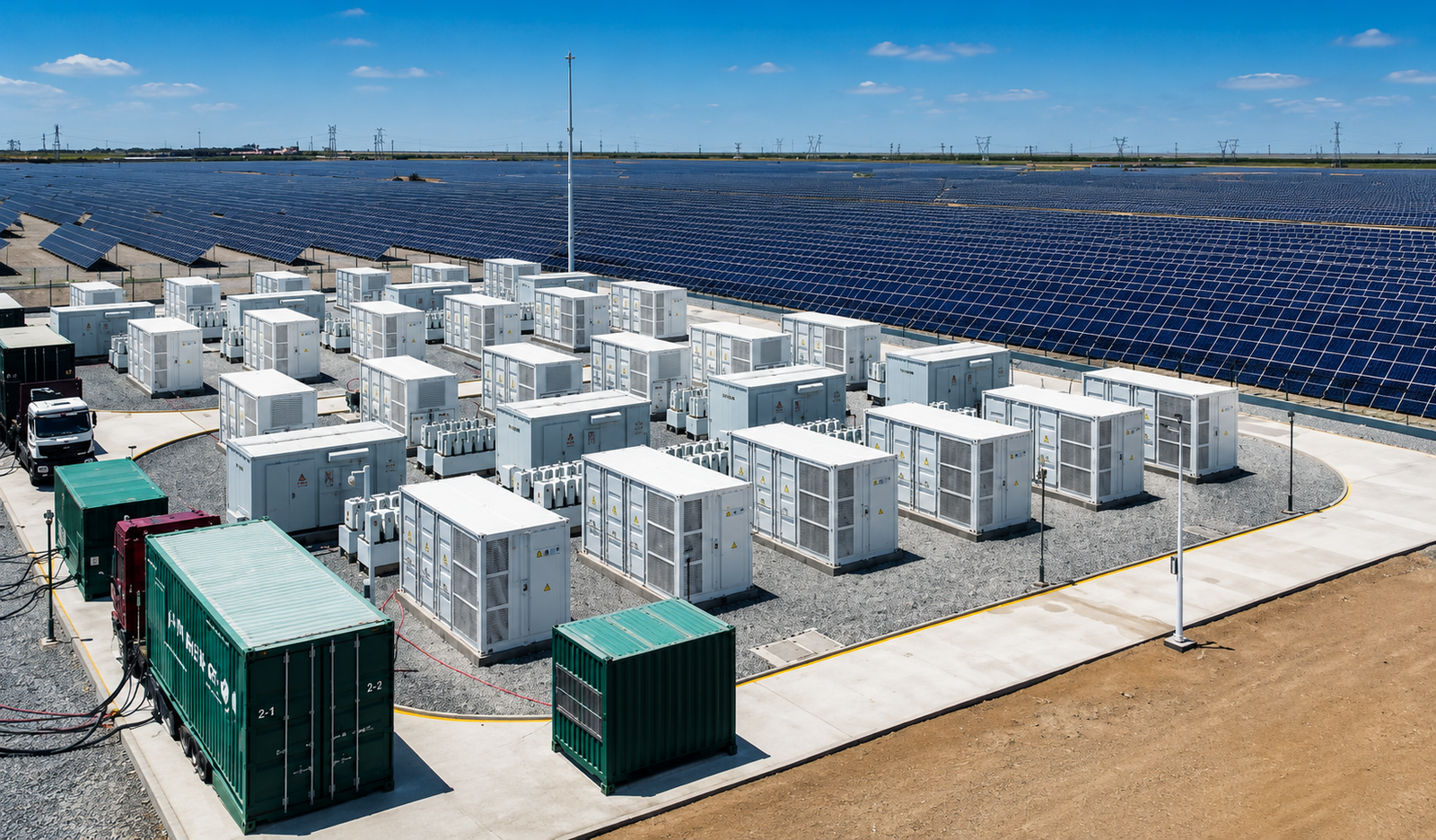
Shandong is China’s top province for installed solar capacity, holding 49.5 GW by mid-2023 per NEA figures — the highest of any province. A Shenzhen-listed manufacturer with scope-2 emissions targets can’t ignore that resource. The problem is the midday deep-valley tariff: Shandong’s dynamic TOU windows push noon hours into the lowest price band, so co-located PV generates at the worst possible price without storage to time-shift it. The engineering design landed on 20 × HLY-BESS-Utility-5MWh blocks grouped into 2 PCS array clusters at the facility MV busbar (100 MWh of energy capacity at 50 MW rated power, 2-hour dispatch duration), sized to absorb the midday generation surplus and deliver it into the evening peak window when tariff spreads are widest and the facility’s load is highest. Shandong’s continental climate (winter lows below −5 °C, summer highs above 38 °C) drove liquid-cooled thermal management as the platform default. Factory acceptance testing was completed at Henley Power’s Dezhou site, commissioned in 2025 at the Shandong manufacturing complex under the customer’s engineering team before site acceptance testing on connection to the facility MV bus. Dispatch capability for ancillary services — frequency regulation, capacity firming — sits on the revenue stack as an optionality layer, subject to dispatch operator qualification, but the primary commissioned application isn’t grid ancillary services — it’s behind-the-meter demand management.

Two of the four shortlisted bidders were BloombergNEF-listed integrators with national EPC footprints. The Shenzhen-listed status of the client isn’t a footnote — listed companies in China follow disclosure obligations that include supply chain documentation standards. The procurement committee required IEC test reports, multi-supplier LFP cell homologation evidence, FSR documentation, and a warranty pathway that would survive internal legal review. BloombergNEF (2024) reported China’s turnkey BESS prices averaged roughly $85/kWh for 4-hour systems — the lowest of any major market — and that cost basis is what made the multi-year payback case investable on its own merits. Henley Power’s insurance-backed warranty structure — manufacturer warranty backed by a licensed European insurer — cleared the procurement bar directly. The project moved under insurance-backed pathway from day one. Cell sourcing is Henley Power’s standard: multi-supplier homologated LFP from publicly listed Tier-1 cell manufacturers, documented under NDA and never on public pages. The system has been operating since commissioning in 2025, collecting demand-charge, PV self-consumption, and capacity-payment telemetry for a Q3 2026 joint 24-month performance disclosure.

PAIN POINTS ADDRESSED

Three problems this project solved

01

Demand charge spikes under two-part tariff

NDRC’s two-part industrial tariff (NDRC Price [2023] No.526) requires all transformer users above 315 kVA to pay a basic electricity charge calculated on peak demand — not total consumption. For a tire-machinery complex with multiple production lines, simultaneous startup events create 15-minute demand spikes that set the billing baseline for the entire month. At 50 MW rated power, the BESS clips the peak before it registers at the grid meter, directly reducing the basic electricity charge line. That’s not an indirect benefit — it’s a calculable monthly reduction tied to how many peak events the system intercepts.

02

Co-located PV curtailment in Shandong's noon deep-valley

Shandong held 49.5 GW of installed solar by mid-2023 — China’s highest among all provinces — and the regulator responded by pushing noon hours into the deep-valley tariff band, the lowest price period of the day. A large industrial PV installation generating midday power that the local feeder can’t absorb is a curtailment problem. 100 MWh of storage at the MV busbar absorbs the noon generation surplus and re-delivers it into the evening peak window when the facility’s load is highest and tariff spreads are widest. That time-shift converts curtailed PV into the most valuable part of the billing period.

03

Institutional procurement documentation standard

Shenzhen-listed companies follow internal procurement obligations that match project-finance documentation standards: IEC test reports, multi-supplier cell homologation evidence, FSR documentation, and a warranty structure with institutional backing. The procurement committee needed a warranty pathway that survives legal review — not a manufacturer promise with no underwriter behind it. Henley Power’s insurance-backed warranty, backed by a licensed European insurer, cleared that bar without requiring the client to negotiate add-ons post-award. The full documentation package — test reports, homologation records, FSR docs — was delivered at contract award, under NDA.

SITE DOCUMENTATION

Site photography

Site photography pending public release · Q3 2026 1 / 1

PROJECT FAQ

Questions buyers ask about this project

What was deployed at the Shandong tire-machinery facility?
Henley Power deployed 100 MWh of behind-the-meter BESS at 50 MW rated power, commissioned in Q3 2025 at a Shenzhen-listed tire-machinery manufacturing complex in Shandong Province. The configuration is 20 × HLY-BESS-Utility-5MWh containerized blocks at 2-hour discharge duration, paralleled into the facility’s MV busbar with grid-following PCS architecture and per-block fault isolation. The system runs industrial peak shaving, demand charge management under NDRC’s two-part tariff structure, and co-located PV integration.
Three factors. Local presence: Henley Power’s Dezhou manufacturing site is in Shandong, the same province as the project, enabling commissioning-stage engineering response and local regulatory familiarity. Single-signatory structure: the manufacturer’s procurement team required one warranty counterparty covering equipment, integration, and 5+5yr post-commissioning service — no subcontractor chain. Bankability depth: the Shenzhen-listed client required IEC test reports, multi-supplier cell homologation documentation, FSR documentation, and a warranty structure that passes procurement committee review. Insurance-backed pathway met that requirement directly.
The project follows Henley Power’s standard 5+5-year direct manufacturer warranty. Warranty insurance via licensed European insurer is available as a project option for DFI-financed and institutionally-backed tenders. Parent guarantee or escrow alternative on request. The Shandong tire-machinery project moved under insurance-backed pathway, aligned with the Shenzhen-listed client’s institutional procurement requirements.
Honest answer: not yet at full disclosure. The project commissioned in Q3 2025 and has been operating roughly seven months at time of publication — below the 12-month threshold for a statistically meaningful demand-charge performance cycle under Shandong’s billing structure. Design-case framing references NDRC’s two-part tariff demand-charge calculation framework and the project’s engineered 2-hour dispatch window. Joint performance disclosure — realized demand charge reduction, PV self-consumption uplift, and capacity payment capture — is set for Q3 2026 alongside Henley Power’s 24-month project dataset window. Documentation package available on request, subject to NDA.
Yes — reference availability on request after a mutual NDA. The operator has agreed to participate in reference discussions for qualifying industrial-tender processes. The Shenzhen-listed client’s procurement framework includes standard NDA boundary clauses; site visit scheduling is subject to operational access coordination. Contact Henley Power’s bankability desk to initiate the reference process.

Related Henley Power products

Products deployed or relevant to this configuration

C&I · LIQUID-COOLED

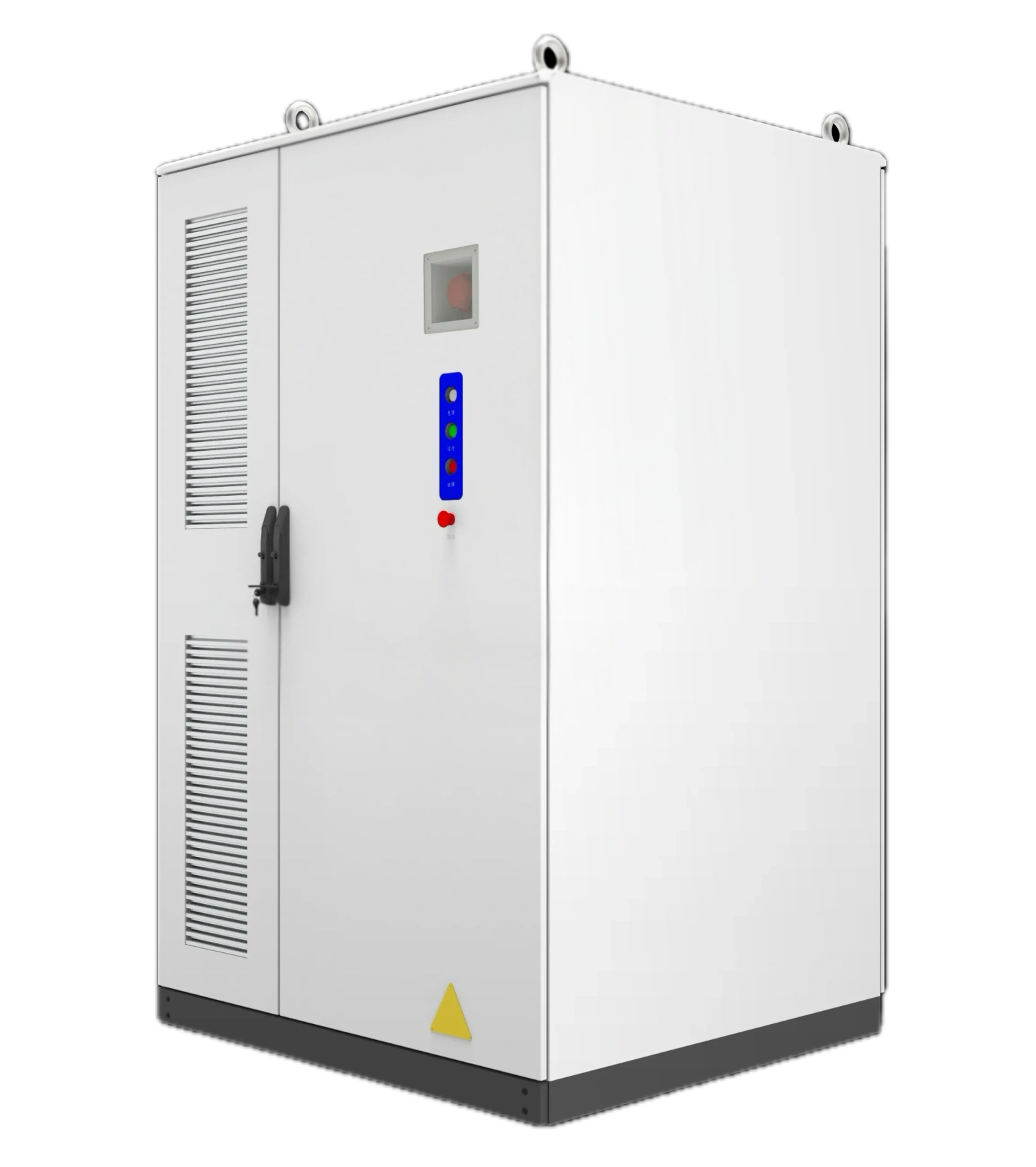
HLY-BESS-Commercial-Industrial-418kWh

200 kW / 418 kWh in one outdoor cabinet.

418 kWh

200 kW / 418 kWh liquid-cooled outdoor cabinet at 1,331 Vdc — industrial peak-shaving, data centres, large commercial portfolios.

View product

UTILITY

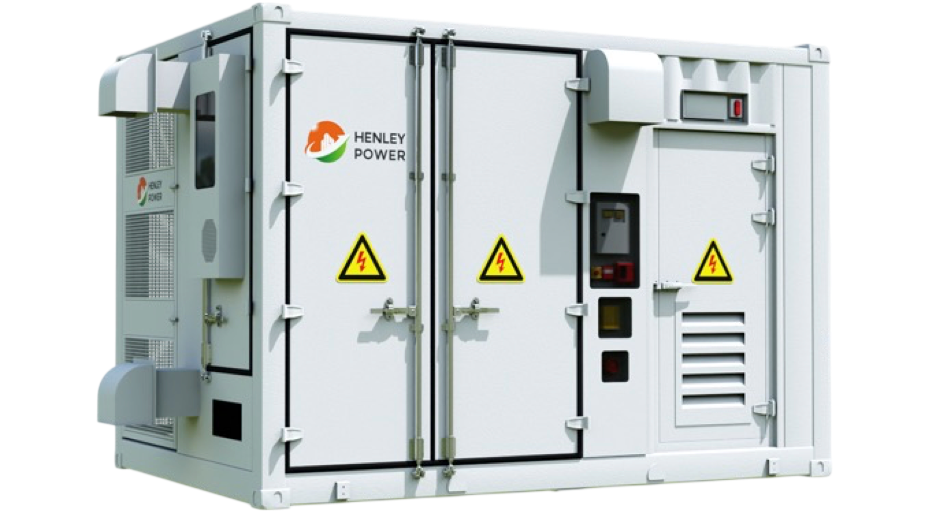
HLY-BESS-Utility-2MWh

Utility-Scale BESS — 2 MWh Containerised.

2 MWh

2,232 kWh liquid-cooled LFP in a 20-ft ISO container — IPP solar farms, wind balancing, utility substations.

View product

UTILITY

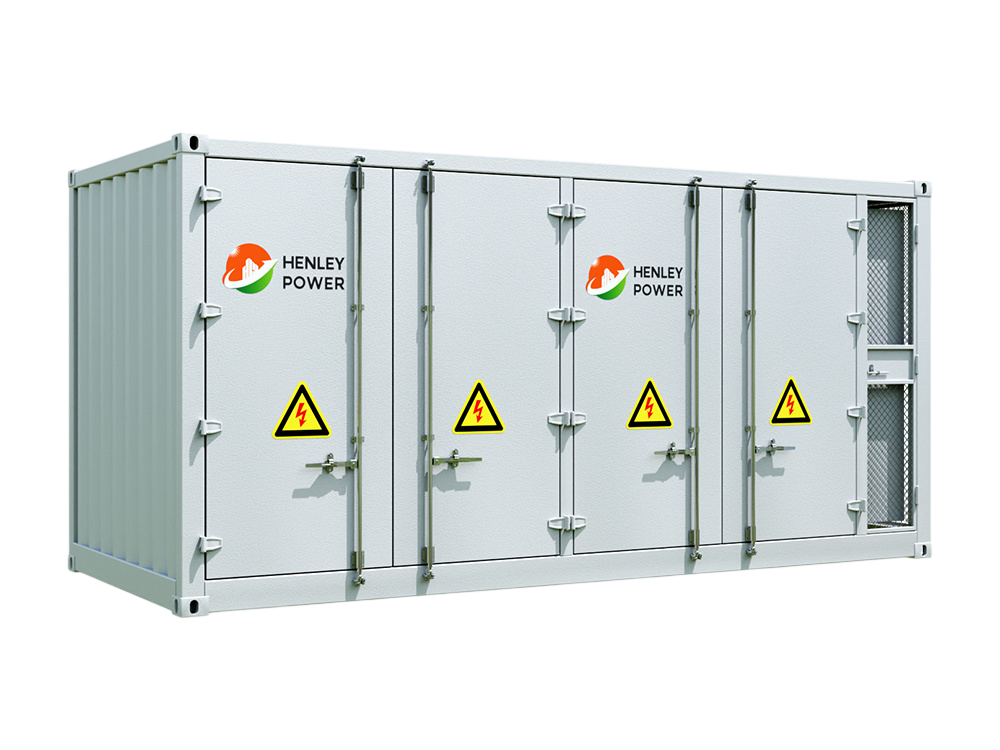
HLY-BESS-Utility-3MWh · 4MWh · 5MWh

Utility-Scale BESS — 3 to 5 MWh Liquid-Cooled Container.

3–5 MWh

3,344 / 4,180 / 5,015 kWh liquid-cooled LFP in 20-ft ISO containers — grid-scale storage, frequency response, BESS-as-a-service.

View product

Related projects

Other Henley Power deployments

Moldova Agri Hybrid Storage

Moldova · 1.25 MW / 2.61 MWh · Commissioned 2025

View Project

Chad Township Microgrid

Chad · 8 MW / 16 MWh + 4 MW PV · Commissioned 2025

View Project

Shandong Dezhou Utility BESS

Dezhou, Shandong · 45 MW / 90 MWh · Commissioned 2025

View Project